What if we used to be the same person, you and I? Or will be the same person in the future? Or both — were and will be? These are the kinds of thoughts that can take over my brain in the middle of the night.
Several years ago, I read Bill Bryson’s popular science book A Short History of Nearly Everything. One point stuck with me, and I ponder it often, sometimes even in broad daylight. Since matter is never destroyed, only transformed, that means all of the atoms that make up our bodies used to form the essence of other things. Or people.
This insight rated an out-loud “wow!” when I read it. Some of my current substance could formerly have belonged to other people. It’s possible that atoms in my body right now used to be part of Isaac Newton or Sappho or Judas. I never believed in reincarnation as I understood it (or possibly misunderstood it.) But now I might? In a way.
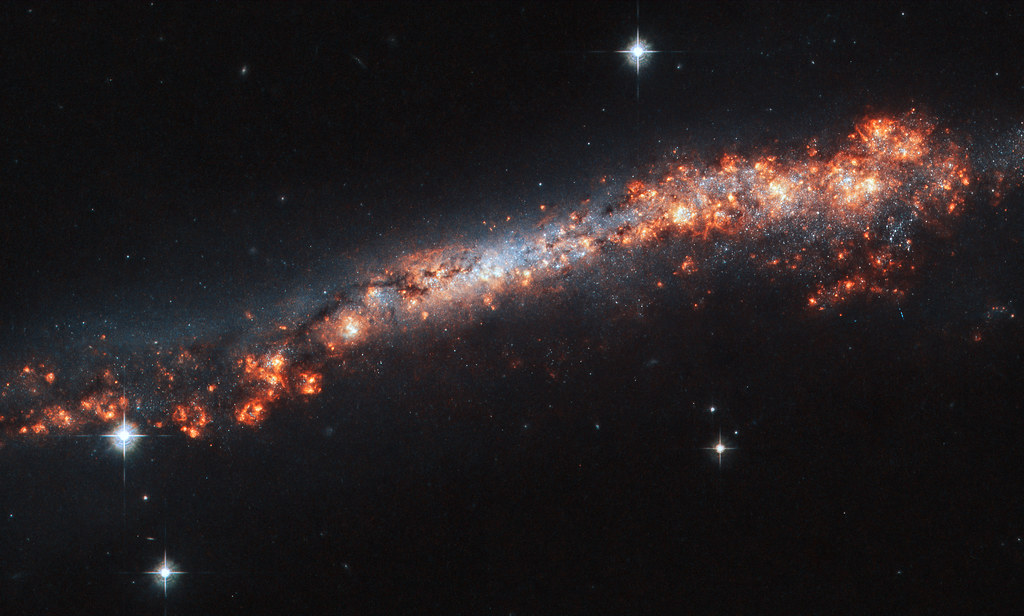
I was already stunned enough knowing that the elements of us used to reside in stars — the hydrogen and carbon, oxygen and nitrogen, sent on their voyages billions of years ago. Those particles have been cycling and recycling through time, and now they’re us. Here we are, repurposed star matter.
I was sleepless the other night and musing on all of this existential stuff once again. Somehow, as many times as I’ve thought about the wonder of it all, and what it means on a spiritual level, my brain had never taken the next step. Until now.
If some of the atoms that make up my body used to belong to someone else, and some of the atoms that make up your body, dear reader, used to belong to someone else, isn’t it possible we both have previously owned atoms from the same source? What if we used to be the same person? What if we both were Sappho or Newton?
Even if we never were together in the same incarnation in the past, we could be in the future. We could be on a journey toward becoming one new person together a few hundred or thousand years from now.
When I gave birth to my first child, I looked at my husband differently. The two of us have had our relationship ups and downs over the years. Yet once we’d created a human life together, I felt we were forever bonded. Even if we eventually separated and never saw each other again, we would be together, still, in this new person.
Now I see this could be true of myself and any other human. Everyone who ever lived is possibly a forebear, even those who “died childless.” Every human yet to come is a possible descendant, of a sort. Here we all are, trading our component members back and forth like baseball teams, forming and re-forming into a multitude of configurations.
Since making this mental leap, my new middle-of-the-night ruminations center around what it means, or should mean, for how I judge others. I was raised in the Christian faith and am well aware of Jesus’ teachings on the topic. “Truly I tell you, whatever you did for one of the least of these brothers and sisters of mine, you did for me.” These words seem a lot more literal to me now.
Many faiths have similar tenets, of course. When asked how we should treat others, the Hindu sage, Ramana Maharshi answered: There are no others.
There are no others. We’re one with the stars. We’re one with each other. I’ve only recently become aware of this on the atomic level.

 Nomadic Noesis