Boundless, a publication of the Unbound Book Festival, is a collection of many wonderful stories. I am honored to have one of mine among them. If you’re burning with curiosity to find out what a story called Posthumous Divorce could possibly be about, click on the title (first word of the blog post) to order the book on Amazon.
August 12 is World Elephant Day. These amazing creatures are in crisis and it’s largely down to human behavior. In the past ten years, their numbers have decreased 62%.
See the World Elephant Day website for more information, including ways we can help.
Since education is always an important component of any venture, here’s a recommended reading list:
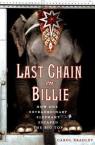
Last Chain on Billie by Carol Bradley. An examination of one elephant’s life in the context of a shameful history of abuse of circus animals in the U.S.
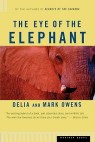
The Eye of the Elephant by Delia Owens and Mark Owens. The story of how one couple took on elephant poachers in Zambia and did their best to assist local communities at the same time.
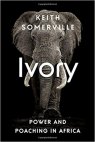
Ivory: Power and Poaching in Africa by Keith Somerville. The ivory trade is the biggest threat elephants face. Poachers have decimated populations in order to get tusks to trade. Worse, much of the profit ends up funding terrorism. Don’t buy ivory!
One easy thing we all can do is limit our consumption of foods containing palm oil. Palm oil plantations have wiped out swaths of habitat for elephants and other wildlife.
Happy World Elephant Day! Let’s celebrate by working to save them.
Home is the sweetest word there is. – Laura Ingalls Wilder
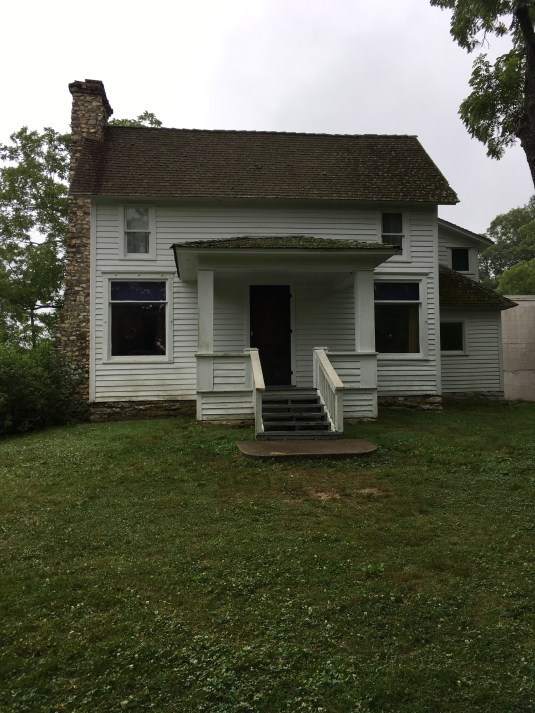
The home on Rocky Ridge Farm where Laura Ingalls Wilder wrote the “Little House” books. Mansfield, Missouri.
Reading the Little House series as a child, I was enthralled by the many adventures, big and small, of the Ingalls family: fording the river with a horse and wagon, fights with Nellie Oleson, twisting switch grass into kindling. I identified with tom-boy Laura, climbing trees and failing to keep her dress clean. Her detailed descriptions of home life also mesmerized me, as I read about Pa making his own bullets for hunting and Ma churning butter. Re-reading the books as an adult left me with an impression of a family always searching for home and never really finding it. (Of course, we now know Charles Ingalls, Laura’s father, brought on some of his own trouble by attempting to stake claim to land that belonged to Native Americans, and a couple of similar questionable actions.)
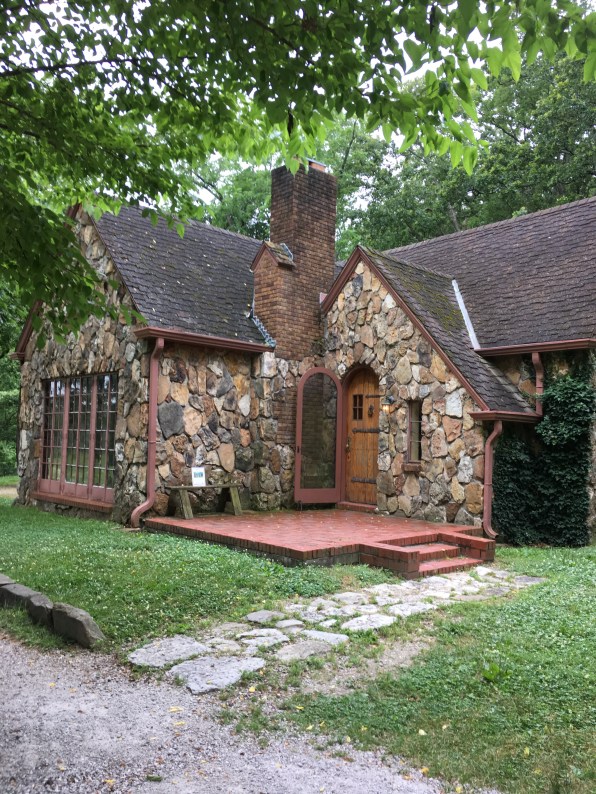
After such a nomadic upbringing, Laura finally found her forever home when she and husband Almanzo moved to Rocky Ridge Farm near Mansfield, Missouri. She settled in as a young wife and mother in her twenties and lived there for more than sixty years, until her death in 1957, at age ninety. In the late 1920s, the Wilders’ daughter, Rose Wilder Lane, had a more modern house built for her parents half a mile down the road, and they stayed in it for a few years before homesickness brought them back to finish out their years in the house they’d built themselves.
The Rock House that Rose Wilder Lane had built for her parents, Laura and Almanzo.
I live only a three-hour drive from the Wilder homes. After decades of talking about it, I finally made the pilgrimage last week. My husband was a good sport and went along with me. There may have been mentions of a fishing pond near our rental cabin to lure him into the adventure.
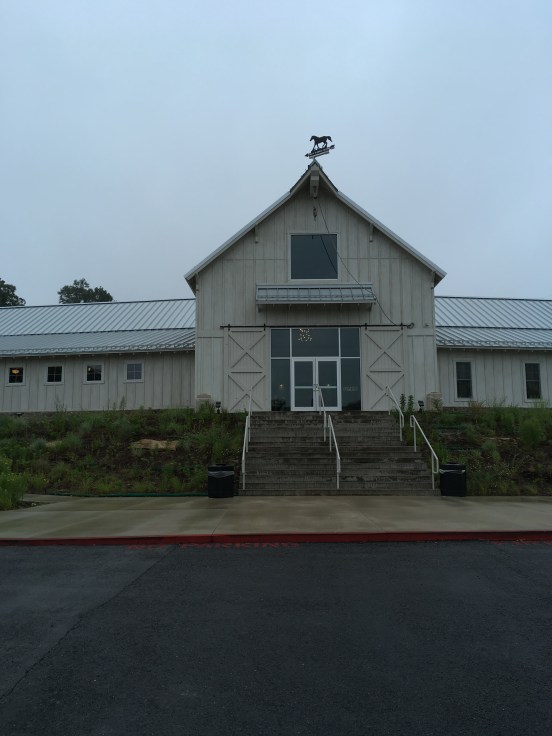
Both Rocky Ridge houses have tours on a regular schedule, and there’s also a separate museum building on the grounds. In case you’re planning a trip, the museum is where you buy the tickets for the tours. I wish they allowed photography inside any of the facilities, but since they don’t, you’ll have to take my word for what we saw.
Laura Ingalls Wilder Museum, Mansfield, MO
Pa’s fiddle! The museum has Pa’s fiddle in a display case. It’s in remarkable shape, and looking at it brought to mind many scenes from the books, from Pa playing the children to sleep with lullabies to big dances at the grandparents’. They also have Laura’s blue china cow creamer. I don’t remember which book has the description of it; but I do remember it being mentioned.
The homes themselves have been restored and preserved with as many original furnishings as possible, much of it hand-crafted by Almanzo. There’s some incredibly durable linoleum in the frame house that is not reproduction, or so we were informed. The Christmas Clock Almanzo gifted to Laura still hangs on the wall, ticking away. Laura’s writing desk is there. The original house is well-designed, but the ceilings are low. Our tour guide reminded us the Wilders were not big people. Laura topped out at 4’11” and Almanzo stood 5’4″. Keep that in mind when you think of him hauling bushels of wheat through a blizzard to save the town in The Long Winter.
I have a hard time on tours like this. It means so much to me to get to be in Laura’s home and see the actual objects described in her books, lending immediacy to the stories. But you can’t touch anything and you have to move on through when they tell you to. No standing and studying the details of any one thing until you’re satiated. I understand why and agree with it on principle. Gee willikers, though (sorry for the wooden swearing, Ma Ingalls), I wanted to soooo much. I experienced an intense desire to stay for hours, to sit it in her chairs and run my hand over her desk. Don’t worry, I kept control. Barely.
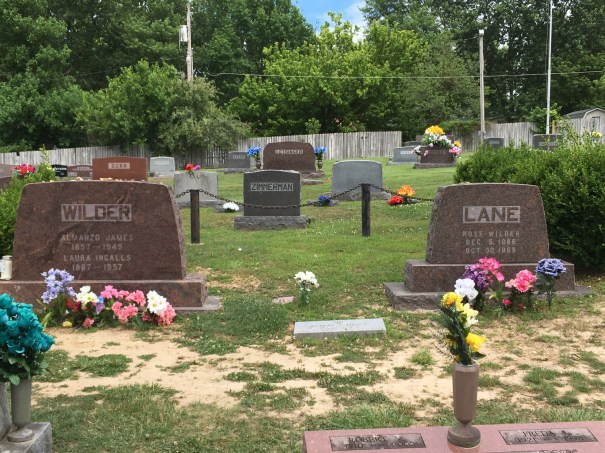
The final step of our literary mission took us to the Wilder resting place.
“And there is the thing that one does, the needle one plies, the work, and within that work a chance to take thoughts that are hot and formless and to place them slowly and with meticulous effort into some shapely heat-retaining form, even as the gods, or nature, or the soundless wheels of time have made forms all across the soft, curved universe…” – Mary Oliver, Upstream
I’m a big fan of Mary Oliver’s writing. She makes connections, or rather shows connections, that are not obvious on the surface. Her descriptions of nature do more than make you want to re-read the passage. They make you want to go see the world for yourself and then re-read the passage. Her poems are bereft of sentimentality, but full of mindful observation. And I can guarantee there’s some sweat behind those words.
Here’s the thing about writing poetry — it takes work. A surprising number of people don’t seem to know this. I’ve witnessed more than once an acquaintance who, having read only a handful of poems in a lifetime, stumbles upon one of Oliver’s more moving pieces of verse (often Wild Geese) and decides “I, too, will be a poet.” Which is wonderful. It’s wonderful when a writer inspires others to write. But some of these folks harbor the delusion that all it takes to become another Mary Oliver is a walk in the woods, followed by fifteen minutes with a pen, scribbling the first thoughts that come to mind.
I’m not saying it’s a waste of time if you want to do this. It can be a great centering activity and increase your awareness of the world. I am saying not to expect to produce a Great Poem, one that will be anthologized and inspire future generations, without toil. Don’t expect to produce good writing without study, without putting in many hours reading your genre (whether it’s poetry or science fiction or a melding of the two.)
My hope is that everyone with a desire to “write like Mary Oliver” will read her book, Upstream. Notice the phrase “meticulous effort” in the quote above? In Upstream, she speaks a lot about the value of work. She also shares many thoughts about writers who have influenced her – Whitman, Poe, Emerson, Wordsworth. She has read them thoroughly, delving into their techniques and examining the contexts of their lives. She brings the same keen gaze to literature that she does to trees and geese and dogs, looking deeply into the nature of the writing and how it fits into the web of all things.
The woman has put a lot of effort into producing sets of words that stir the souls of her readers. Once we realize this, we can appreciate her even more.
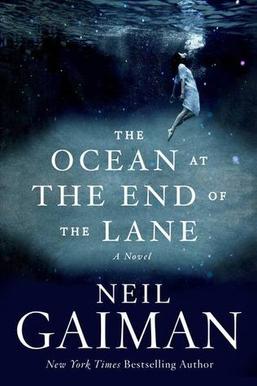
I recently re-read Neil Gaiman’s book, “The Ocean at the End of the Lane.” It’s a quick and thrilling read. The narrator, an unnamed man now in his forties, comes home for a funeral and revisits the family who lived down at the end of the lane from his childhood home. While there, he recalls events from the year he was seven. The happenings included encounters with powerful and sometimes terrifying creatures.
Avid readers will identify with the protagonist when he says, “I went away in my head, into a book. That was where I went whenever real life was too hard or too inflexible.”
Without giving too many spoilers, I’ll stick with saying his situation gets to the point where even his home and family aren’t safe for him. But he still has his books. He reads about Narnia. He reads his mother’s old books about teenage girl heroines who save their country in World War II. He takes refuge with Dick Whittington and his cat. Here’s the really brilliant part. When he’s in danger and can’t get to a book, he keeps himself together by thinking about books he’s read. They’re still with him in his head. It’s even what he says. The safe place is in his head; books get him there.
This struck me because there have been a number of times in my life where no place felt secure, or when I was in a fraught situation where I couldn’t physically leave. But I could read. Whether I was visiting with literary characters who were experiencing the same things I was and thus made me feel less alone, or going on an incredible adventure completely removed from my corporeal life, I could take mental flight through books. Like the boy in Gaiman’s book, I discovered I could create a safe space in my head. I can carry my safe space with me. It’s a pretty good coping strategy. Honestly, I don’t know how non-readers survive.
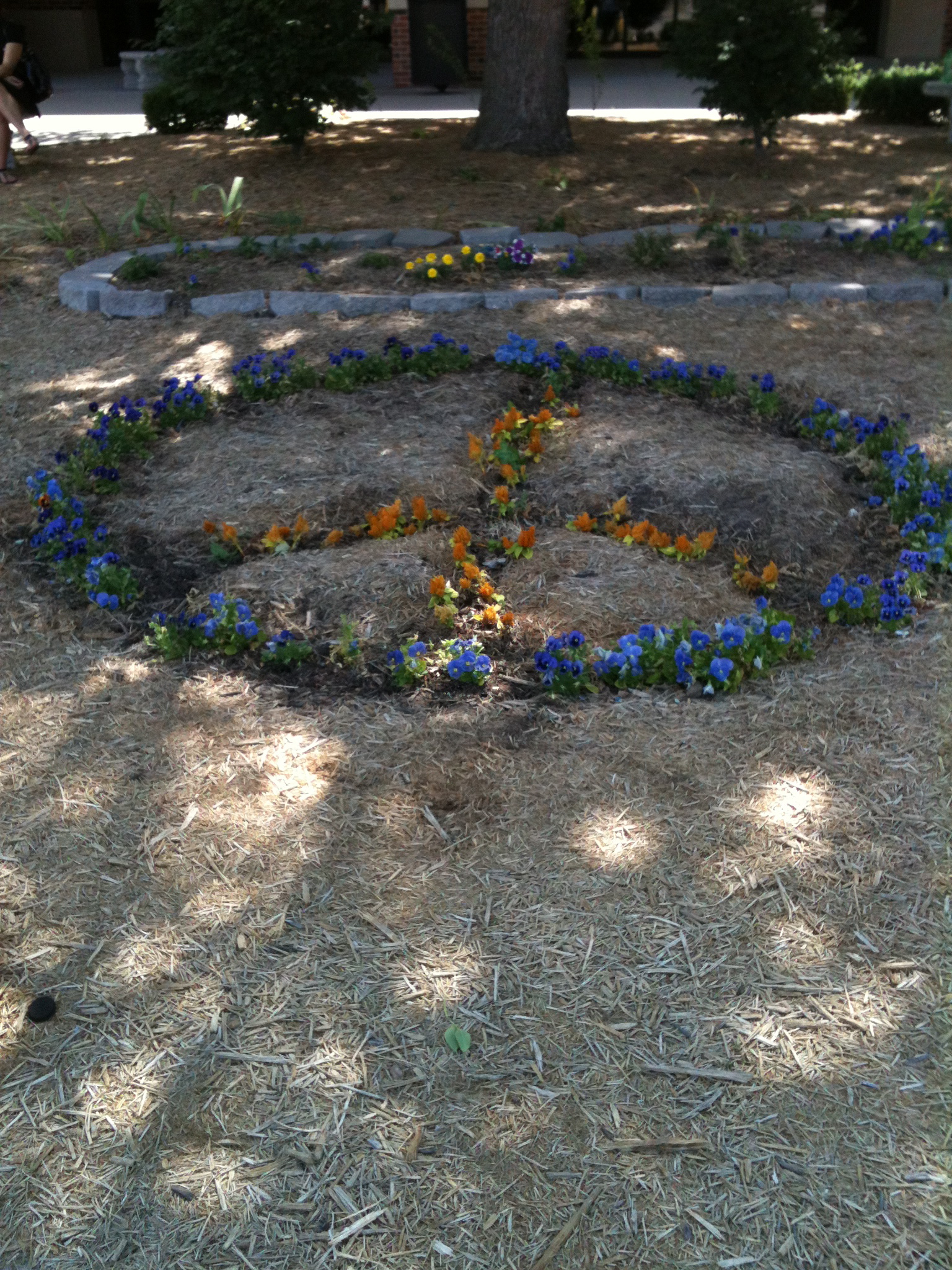
What are your favorite books about peace? Here are a few of mine:
“The Story of Ferdinand” by Munro Leaf. This story of the bull who refused to fight remains one of my best-loved children’s books. I love how Ferdinand has nothing to prove and only wants to be himself, sitting peacefully among the flowers.
“The War Prayer” by Mark Twain. Think about what you’re praying for when you pray for victory in war. Really think about it.
“Slaughterhouse Five” by Kurt Vonnegut. For all of it SciFiNess, this gives a very realistic look at how unromantic and ridiculous war is.
“The Secret Garden” by Frances Hodgson Burnett. Yep, I consider this kids’ tale to be a book about peace. There’s nothing about resisting organized battles, but there’s lots about people from different backgrounds coming together and discovering the dual powers of love and responsibility to improve their lives.
In case you missed it, NPR recently conducted a reader survey about the best young adult novels of all time. After the votes were tabulated, they published a list of the top 100. Now, they’re discussing why they ended up with what may also be the “whitest ever” list of teen books. I hate to admit, this never occurred to me as I voted nor as I eagerly scanned the final list.
I will mention, in the second article they miss two main characters who are not white in the books. Katniss Everdeen of “Hunger Games” is described as having olive skin and black hair. And Ged (aka Sparrowhawk) of the “Earthsea” trilogy, also has dark skin and hair.
Still, the representation is pretty slim. And this set me to thinking about my own writing. I’m white and I tend to write main characters who look like me. I can think of only one exception. Of course, I haven’t written prolific amounts of fiction (yet.) Part of this is that I’m not sure I would be able accurately to “get” the experiences of people who haven’t lived as a white person in the U.S. I do have some characters who are other races, however. So is this diversity on my part, or tokenism? And how can I tell the difference? I struggle with this question. The few stories I have written take place in my country and I want the population to look realistic, including the variety of people you’d meet.
Ursula K. Le Guin, I’ve noticed, is a white author who often has characters with darker skin (I’ve already mentioned Ged.) And she manages to pull it off. But then again, she’s writing science fiction, so her characters’ cultures are of her own invention. For the most part, I think it’s important to make a place for a diversity of authors if we want a diversity of characters.
I work in a public library, and I try to be aware of the entire population we serve – baby to elderly, different cultures, different genders, different sexual orientations, different abilities. One small example is the New Biography section. In our “New Books” area, we try to put as many books as possible face out, so patrons can see the cover. We have hangers for a few face-out books on each end of the shelving unit, and sometimes we can fit a few face out on the shelves, as well. I can’t help noticing that most biographies – still, here in the 21st century – are about white men. Really, a large, large percentage of the new biographies we have. I don’t want to short-change anyone, including white men, but I think having a variety of faces show up on our shelves is one small way to make sure different groups of people feel comfortable and welcome using the library. We’re always pushed for time and it’s easy, hurriedly grabbing a handful of new biographies for display, to end up with a wall of white and male. When I see this happen, I try to take a minute to find at least a couple that are female and have other skin tones. I know many of my co-workers do, too.
Now, I’m going to feel compelled to go back through my own book lists I’ve published here and see if I’ve been as inclusive as I could be.
“Oh no. I forgot my book!” That was me, in the salon where I had taken my son for a haircut. Imagine it said in a tone of real panic, because it was. I was reduced to reading a fashion magazine while I waited. Not reading didn’t seem like an option. There was printed matter in front of me, after all, even if it wasn’t my first choice of material.
“Do you have something to read?” This is me any time I’m taking a road trip with my kids.I ask this the way other moms ask “Did you pack your toothbrush?” I try to remind them, as well, if we’re going some place with a waiting room – doctor, dentist, etc. “Bring a book; we might have to wait.” My kids and I have serious discussions about what they’re going to read next when one of them has just finished a book. These are the among the most joyous conversations of my life.
I found the greatest purse at a yard sale. It’s big enough to fit my wallet and a book. I try to keep a book with me most of the time. I know people who claim they don’t have time to read. But I’ve finished many a chapter while sitting outside a school, waiting for a kid to come out the door. Also, I read while I eat breakfast. And on my break at work. I’ve even been seen cooking dinner with a spatula in one hand and a book in the other. I don’t burn too many things. Thank goodness I’ve never caught a book on fire. Yet.
I don’t usually use a blog post only for a link, but I believe everyone needs to read this brilliant essay by Ursula K. Le Guin. And then, if you haven’t already, read some of her books. My favorite is “The Left Hand of Darkness.”
An excerpt from the essay: “If we thought of all fictional genres as literature, we’d be done with the time-wasting, ill-natured diatribes and sneers against popular novelists who don’t write by the rules of realism, the banning of imaginative writing from MFA writing courses, the failure of so many English teachers to teach what people actually read, and the endless, silly apologising for actually reading it.”


 Nomadic Noesis