Fathers in Memoir and Fiction

I meant to have this done and posted yesterday, but life had other plans for me. Squeaking in just before Father’s Day is over, I present you with a list of books featuring dads.

Beautiful Boy by David Sheff. In this memoir, Sheff speaks about the pain of having meth as a rival for his son’s devotion. He questions his parenting. He sees his hopes raised and dashed repeatedly. And then there’s the effect on his other kids. As any parent of more than one child can tell you, any decision you make for one has ramifications for the others.

A Heartbreaking Work of Staggering Genius by Dave Eggers. Eggers is a brother who filled a father’s role. He was only 21 when his father and mother both succumbed to cancer within a few weeks of each other, leaving Dave in charge of his 8-year-old brother. This memoir had me laughing and crying, often at the same time.

Love in the Driest Season by Neely Tucker. Neely Tucker, a white American journalist, recounts the story of how he and his black wife, Vita, relocated to Zimbabwe, where they volunteered at an orphanage and fell in love with a little girl who they believed might have AIDS.

Plainsong by Kent Haruf. Written in spare, but beautiful prose, this novel introduces us to small town high school teacher, Tom Guthrie, who is raising his two sons by himself. Meanwhile, he’s dealing with a student who bullies, a student who is pregnant, fellow teacher Maggie Jones, and wait – how do two bachelor farmer brothers come into this picture? Read and find out.

Shit My Dad Says by Justin Halpern. What started as a Twitter account turned into one of the funniest memoirs I have ever read. At 28, Halpern lost his job and moved back in with his 73-year-old dad.  “Remember when you used to make fun of me for being bald?…No, I’m not gonna make a joke. I’ll let the mirror do that.” People who get the vapors over cursing should avoid it. Despite being extremely salty, Halpern’s dad does seem to have his son’s best interests at heart, in the end.

Silas Marner by George Eliot. In today’s world, Silas Marner would never be approved to adopt a child. But in Eliot’s novel, the reclusive miser turns out to be a pretty good father to the little girl who wanders into his life. Father and daughter both learn love really is more important than money.

A Thousand Acres by Jane Smiley. In this novel, the setting is a Midwest family farm in the 1970s. But the seemingly average Cook family is living out a 20th-century version of Shakespeare’s King Lear, complete with the division of the estate, the exile of one daughter, the love triangles and the onset of patriarchal madness.

To Kill a Mockingbird by Harper Lee. Atticus Finch is one of the greatest literary fathers of all time. He is wise and kind and understanding of his children, while holding expectations of the same behavior from them. Then there’s his courage in standing up for the underdog. “Truth, justice and the American Way” – Superman, or Superdad Atticus Finch?

The Whistling Season by Ivan Doig. This novel, set in 1909 Montana, is narrated by the oldest of widower Oliver Milliron’s three boys. Their father hires a housekeeper through a newspaper ad, a housekeeper who brings along a character of a brother, and a mystery.

Winter’s Bone by Daniel Woodrell. Though Ree Dolly’s father is more talked about than shown, the reader certainly comes to know a lot about him. The things we find out right way are: he has drug charges pending against him, he has put up the family home as bond, and he can’t be found. It’s up to 16-year-old Ree to find him and thus save the home.
Book List: Mothers in Fiction and Memoir

For Mother’s Day, a list of some books featuring moms:

American Mom by Mary Kay Blakely. The former Ms. Magazine editor’s memoir of raising her two boys. It’s insightful, touching and real. I once heard Blakely tell a funny story about this book’s title. She said she wanted to call it “Raising Terrorists,” but bowed to her publisher’s wishes and called it “American Mom” instead. One day, running late to a book signing, she was pulled over for speeding, and had to explain to the police officer how she was on her way to sign copies of her book American Mom. At that moment, she said, she realized how smart it was to listen to your publisher.

Beloved by Toni Morrison. In this post-Civil War novel, a lost soul reappears. Sethe, a former slave, is consumed with mourning for the young daughter who died years earlier. One day, the daughter’s spirit arrives on Sethe’s doorstep in the form of a young woman. Through her we see the ghosts of slavery are not easily banished.

Black and Blue by Anna Quindlen. How do you report spousal abuse when the spouse who beats you is a police officer? You don’t. You pack up your son and sneak away with him, doing your best to build new identities and become untrackable. I think this novel has one of the best endings I’ve ever read. Not tidy, though.

The Corrections by Jonathan Franzen. The mother in this novel, Enid Lambert, comes to a realization: “What you discovered about yourself in raising children wasn’t always agreeable or attractive.” Still, Enid dreams of one last family Christmas with their three grown children before the health of her husband, Alfred, declines too much. Their kids’ lives are falling apart in different ways, and Enid’s campaign to bring them together reveals the weaknesses and the strengths of their family ties. There are power struggles galore but also acts of incredible love and self-sacrifice, which gives them a lot in common with many real-life families.

The Deep End of the Ocean by Jacqueline Mitchard. Why did I read this novel when my children were young? Do not read this if you have young children. Read this if your children are big or you have no children. A very busy mom loses one of her three kids. Poof – he vanishes. It’s a good book, a compelling read. Disturbing if your kids are near the age of the one who disappears.

Dinner at the Homesick Restaurant by Anne Tyler. This was the first Anne Tyler novel I ever read. What I love about Tyler’s characters is how close they come to self-awareness without ever quite arriving. Pearl raises three children on her own after her husband leaves, a piece of trivia she neglects to mention to the children. He is traveling salesman, and the youngsters go on for a while thinking he’s simply away on business. The three kids grow up with a fair amount of sibling rivalry and do their best to create the next generation of family messiness.

I Been in Sorrow’s Kitchen and Licked Out All the Pots by Susan Strait. Upon her mother’s death in 1959, teenager Marietta Cook – tall and strong and blue black – leaves her home in Pine Garden, South Carolina, a place forgotten by time. She heads to Charleston to seek her future. The novel follows her life through the birth and raising of twin boys, right into grandmotherhood.

Juno’s Daughters by Lise Saffron. A mom and her two daughters who live on an island in Washington state find a summer of interaction with Shakespearean actors transformative.

Life Among the Savages by Shirley Jackson. There was more to Shirley Jackson than making us confront our worst natures. This memoir of life with her children and husband is laugh out loud funny. It is several decades old, however, so be prepared to cringe over all of the smoking and the lack of seatbelts.

Mother on Fire by Sandra Tsing Loh. This memoir will resonate with any mother who has found herself drowning in navigating the waters of kindergarten enrollment. Though it’s not quite so treacherous where I live. You will laugh as you recognize yourself and other parents in the anecdotes she recounts.

Operating Instructions by Anne Lamott. Lamott’s memoir of her first year of motherhood. She speaks truth in ways most of us are too wimpy to. Also, she’s very witty.

Please Look After Mom by Kyung-Sook Shin’s. This is the tale of an elderly woman who vanishes one day from a Seoul train platform. From the first pages, it’s apparent Mom has been gradually disappearing for years, as her children have grown busy with their own lives and her husband has paid her little attention.

The Prize Winner of Defiance, Ohio by Terry Ryan. Terry Ryan’s memoir is a tribute to her resourceful mother. While her alcoholic husband invested his wages in liquid assets, Evelyn Ryan kept her family of 12 afloat by composing advertising jingles for contests as she did the ironing. She converted her facility for language into money, cars, appliances and grocery shopping sprees while bequeathing her children the legacy of a can-do spirit.

Room by Emma Donoghue. This novel introduces us to a mother struggling to survive in extraordinary circumstances. Five-year-old Jack has spent his entire life in one room, just he and Ma, who makes sure Jack exercises, learns to read and eats the vegetables Old Nick brings on his otherwise unwelcome visits.

Shadow Tag by Louise Erdrich. Not until the end of this novel do you discover who the real narrator is. Erdrich takes the concept of unreliable narrator to new heights. Much of the book is written in the form of excerpts from the diaries of Irene America, a Native American artist, wife and mother. Diaries is plural, because she keeps two: the one she wants her husband to find and read, which is at least partly fictitious, and the real one that she keeps under lock and key. The effects of their parents’ relationship games on the kids is not insignificant.

Wild Swans: Three Daughters of China by Jung Chang. I read this book maybe 12 years ago and it stuck with me. Chang tells the life stories of her grandmother, her mother and herself. Her mother was a young woman during the Cultural Revolution. May you live in interesting times indeed. Small personal moments of heartbreak and triumph are magnified by surrounding large historical events.

Ode to My Favorite Picture Books

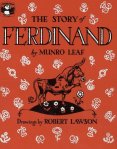
I was thinking today about two of my favorite childhood picture books: “The Story of Ferdinand” by Munro Leaf, and “Harold and the Purple Crayon” by Crockett Johnson. I read both of these over and over. I see now how they’ve influenced me for life.

Here’s today’s poem, a tribute to these two books. It’s rough, but from the heart.

Two Great Teachers

Ferdinand, from you I learned
The value of sitting in the clover
Quietly being true to yourself.
You and Harold
Were my first great teachers.
Ferdinand, I’m so glad you came along
When I was young to show me
conquests and prizes pale
Next to the victory of retaining
Your integrity. From you I learned
Contemplation.
Harold, with his crayon, spurred my creativity,
Showed me I could travel anywhere
Be anything, have wondrous adventures,
No matter my circumstances,
Without depending on someone else,
Without a car or bike or money,
As long as I had imagination.

If you need to find me, I’ll be
Traveling this world and others
In my clover patch.

At the Intersection of Poetry Month and Library Week

A library poem. I wrote this a few years ago.

741.5

A hard rain’s gonna fall
on the head of the next shelver
to work this section of the library

Superheroes overpower the bookends
break free of their confines
fly off the shelves

Snoopy, completely dog-eared
keeps getting unleashed
scampering to the floor

Beatle Bailey and his troop
lose formation
drift off to the wrong location
again

Calvin and Hobbes are out
having an unauthorized adventure
on the far side of Gary Larsen

Large floppy books with bad posture
slouch along the shelves
lean on each other for support
much like the teens who
camp here studying anime and manga

Someone needs to come along
and straighten them up

Does Listening Count as Reading?

For the first time in several years, I have a regular driving commute. Not to work. I still have the same job to which I walk. But my mom lives in town now, in a nursing home about five miles from my house.  That’s a 30 to 40 minute round trip, depending on traffic and weather. I’m making it out there five times per week, so far.

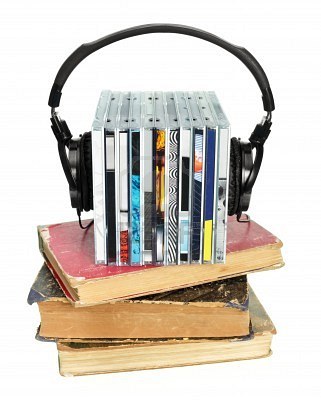
My attempt to make lemonade out of fossil fuels involves checking out lots of music CDs and audio books from the public library. Currently, I’m listening to Haven Kimmel’s memoir, “She Got Up Off the Couch.” I’m getting a real kick out of it. But I have a dilemma about what to do once it’s finished. See, I have these weird OCD habits about keeping a record of what I’ve read. Should I add this book to the list?

It was much simpler when my kids were little and I was listening to children’s audiobooks with them on occasion. Because my rules don’t require me to list things read for someone else’s benefit.

I’ve never counted seeing a movie the same as reading the book from which the movie was made. But this is an unabridged actual reading of the real text. Does it count as reading? Since my schedule is ever more full, I’m trying to make up for lack of looking at text time by using audiobooks as a substitute. I don’t have a problem with listening to a book. My only problem comes with saying, even just to myself, that I read it, when really someone read it to me. For purposes of accommodating my own personality quirks, I think I may have to embrace the asterisk as my savior.


The Borrowers – Recapturing the Joy

Last night I went with my daughter to see The Secret World of Arrietty, a Studio Ghibly film based on The Borrowers by Mary Norton. I adored these books when I was a kid. After seeing the movie, I remember why they were so captivating. Who doesn’t want to dream about little tiny people who genuinely could use the dollhouse furnishings? It made so much sense to me. Of course that’s where the stray buttons and spools of thread went when we couldn’t find them. They were borrowed by the little people. And yet, wouldn’t it be a life of adventure, too? All this needing to hide from the big people, encountering insects nearly your size and the borrowing itself, which requires a borrower to combine the hardiness of a mountaineer with the cunning of a spy.

I remember spending hours trying to create my own little borrower homes with items from around the house. Um, sorry Mom, that is where the missing buttons and thread spools went. I bent paper clips and stuck them through an upended cardboard bank check box to try to simulate a closet. It didn’t look great, but I give myself and A for effort.

It was a true joy watching this movie as an adult. As with all Studio Ghibli productions, the animation was outstanding. If ever a movie called for attention to detail, it’s this one. The fields of wild flowers, in particular, caught my eye. I could pick out individual types of flowers – black-eyed susans and bachelor’s buttons.

Though differing from the book in some regards, the movie was faithful to the basic story and the spirit of the original. My only quibble is with the character of the borrower named Homily, who is Arrietty’s mother. I thought the movie made her too panicky and fretful. If I remember correctly (and I do, because I looked it up), in the book it was Homily who sent Arrietty out borrowing. She wasn’t a mom who stayed home and fainted over things.

Still, I love that the movie, like the books, doesn’t go for the cheap, easy, saccharine ending. It keeps the complexities of the relationships between borrowers and human beans.

My recommendation:  see the movie and read the books. I’m going to re-read them myself.

Favorite Romances

I don’t read genre romances. I’m not knocking them; only saying they’re not my thing. But I am a sucker for a love story, happy or tragic or confused, as long as it’s well done. Sometimes the relationship is the story, and sometimes it’s only part of the bigger picture.  Off the top of my head, here’s a list of books with my favorite romances. These are in no particular order.

The Night Circus by Erin Morgenstern. This is a tale of two magicians, a girl and boy, bound into a rivalry as children. The venue of their lifelong duel is a magical, mysterious circus.

The Great Gatsby by F. Scott Fitzgerald. Oh Gatsby – you let Daisy consume you too much.

The No. 1 Ladies Detective Agency by Alexander McCall Smith. This series has two relationships I adore. Precious Ramotswe and JLB Matakoni is the first. Grace Makutsi and Phuti Radiphuti. They’re so real and sweet and awkward.

Second Nature by Alice Hoffman.  Nearly feral love with a semi-werewolf.

Emma by Jane Austen.  The intrepid match-maker who can’t see her own life clearly. For those who have never read Jane Austen and think she’s stuffy, you couldn’t be more wrong. This book is downright funny. Also touching.

Patchwork Planet by Anne Tyler. Flawed and wonderful characters who stumble through wrong relationships on their way to each other.


My First Novel: a Love Story

When I say love story, I’m not talking about the plot. I’m speaking of the relationship between me and my book.

I finished writing the first draft of my first novel a two years ago. A couple of people read and offered me their thoughts. I have done a couple of revisions. I’ve sent it out a few places and been rejected.

Now, I’m meeting with a novel-writing group and having my manuscript read by more people, who are giving quite helpful feedback. Hearing their comments, I’ve come to see the strengths and weaknesses I display should have been predictable. I’ve spent countless hours of my life immersed in poetry. In more recent years, I’ve produced a number of short stories. My strengths in my first novel, according to my first and second responders, are in dialogue, description and character development. I have many individual wonderful scenes with great dialogue. But it’s obvious this is the first time I’ve plotted something this size. I need to work on the story arc.

I’m trying to decide whether to do another rewrite and work on getting this volume published or whether to let it be and move on. I already have a start on my second novel. I’m about 5,000 words in at the moment. (No sneering at me, please, NaNoWriMo people. I’m a busy woman.)

The other night, while I was pondering my options regarding my firstborn book, I had a happy epiphany. I possess a very healthy emotional relationship with this novel. Whether I do any more revisions, whether I ever publish it or not, I’m so happy to have written it. It’s a story I needed to tell and I’ve told it, if only to a handful of my closest fellow-writers and my spouse. I’m not staking my entire self-concept as a writer on getting it published. I’ve gained some publication credits with several poems and a small handful of short stories. I’ve even been paid some of those times. I learned a lot in the first-novel process and my second book is benefitting already.

See, I don’t have a co-dependent thing going. But I do have a deep, true, abiding love. I’m able to see my novel’s flaws and still care for it – warty story arc and all.  I love my characters. I love my sense of accomplishment in having finished an entire book. I love how much I learned. No matter what I do with my writing in the future, no matter how many books I finish, I will never forget you, first novel. You will always have a special place in my heart.

Veteran, Author – Kurt Vonnegut

“The nicest veterans in Schenectady, I thought, the kindest and funniest ones, the ones who hated war the most, were the ones who’d really fought.” – Kurt Vonnegut

One of my favorite authors, Kurt Vonnegut, was born on Armistice Day in 1922. His experiences as a soldier and POW in World War II influenced much of his writing, especially his novel Slaughterhouse Five, published in 1969. Slaughterhouse Number 5, Dresden, was Vonnegut’s address after he was captured by German soldiers. As a prisoner of war, he was held in the basement of a slaughterhouse, which ironically ensured his survival during the firebombing of Dresden.

Slaughterhouse Five is a novel I feel the need to re-read every few years. I believe Vonnegut’s ability to use time travel and aliens to show his readers absurd truths about real wars showed true genius. I will never forget the image of a soldier trudging for hours through the snow in shoes that are tearing his feet apart.

Happy birthday, Kurt! I know in some version of reality, you can hop in your time machine and come to 2011 to read this blog post.