Do One Thing: Farmers’ Market

Can a bag of onions make a meaningful difference in the world? I sure hope so!
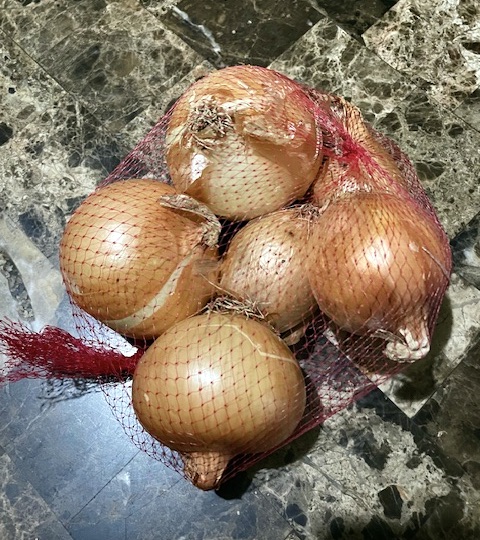

yellow onions in a mesh bag

I know many of us are searching for ways to make a positive impact right now in a time when a lot of things are going very wrong. While we might not experience many opportunities to take big actions, every one of us can do one thing. And those individual contributions add up.

I’ve come to believe community building needs to be an essential focus right now. One specific part of that is supporting local businesses and local agriculture. It’s becoming more vital every day to reinforce strong local food systems.

For a while, I had a subscription to an every-other-week produce box through a local store’s community supported agriculture program. But that was not working out for me logistically, so I cancelled a while back. My little city has a nice, largish, year-round farmer’s market, as well as some smaller seasonal ones. I kept telling myself I should hit them up for some of my food. But even thinking about it made my anxiety spike.

The big market, at least, is a perfect storm of social anxiety and sensory issues for me. I would have to deal with a lot of noise, bustle and crowds while trying to make decisions in a setting where I wasn’t sure of the rules or expectations. That’s every one of my buttons pushed, right there in one go.

But then I made a plan. A bite-sized plan. I could get myself used to farmers’ market shopping and learn the ropes by starting small. All I had to do was go in and buy one item, then leave. Still an improvement over no items from local farmers.

And I did it Saturday morning! I was a little overwhelmed, but I wore my Loop earplugs to minimize noise, looked around for one clearly marked item that I needed, found the onions, and paid. Then I went on to the usual grocery store for the rest of my shopping trip. It’s a start. I can keep taking more steps.

What if we all looked for one step each day or each week? How much difference could we make? Let’s try it and see! Let’s go!

~~
Remembering Coretta Scott King

“What most did not understand then was that I was not only married to the man I loved, but I was also married to the movement that I loved.” – Coretta Scott King


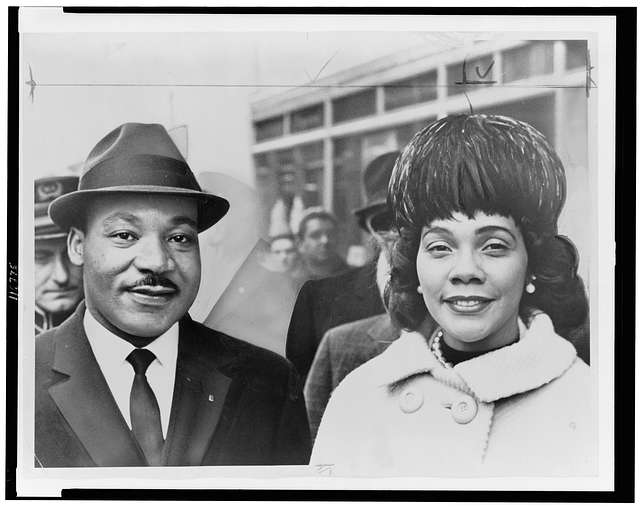
On Martin Luther King, Jr. Day, I’d like to take a couple of minutes to think about the person who, perhaps more than any other, made sure the message and the work of social justice continued after his death. Coretta Scott King was married to Martin Luther King, Jr. for 15 years, a full partner in leading the movement for peace and equal rights.

For another 38 years after his death, she continued leading the charge not only in the U.S., but around the world. This is taken from The King Center website. That would be The King Center that Coretta Scott King founded.

One of the most influential African-American leaders of her time, Mrs. King received honorary doctorates from over 60 colleges and universities; authored two books, edited a compilation of selected quotes by Dr. King, maintained a nationally-syndicated newspaper column, and served on and helped found dozens of organizations, including the Black Leadership Forum, the National Black Coalition for Voter Participation, and the Black Leadership Roundtable.

Mrs. King died on January 30, 2006. She was the first woman and the first African American to lay in honor in the rotunda of the Georgia capitol. Also, a few days after her death, thousands of people stood in line in the rain to pay their respects at a viewing in the heritage sanctuary of the historic Ebenezer Baptist Church in Atlanta.

The Kings taught us a lot about the importance of unity, community, and standing together with the oppressed. I believe those principles are more important today than ever.

~~

Listening to Bill McKibben

Last evening, I had the privilege of attending a free talk by Bill McKibben, a leading experts on climate change. He authored one of the first books on the topic to be written for a lay audience. The End of Nature was published in 1989. McKibben is also one of the founders of 350.org. Click the link to see what they’re about.

I want to share my take-aways from what I heard last night.

  • Time is short. Our window of opportunity to act is closing. We have to make big changes as quickly as possible.
  • The silver lining to the above point is that scientists have figured out what we need to do. (Mostly, stop using fossil fuels.) It’s a matter of actually doing it.
  • Oil companies knew about climate change and how bad it would be back in the 1970s and 80s, but they kept it quiet while redesigning all of their offshore rigs to withstand changes in sea level and sea chemistry. (Steam is still coming out my ears.)
  • McKibben believes we need to focus more on policy change than on personal lifestyle changes. If you can’t influence the federal government, then work on your state or city government. Urge universities and retirement funds to divest from oil companies. I get his point that the changes we need to make are so large and the time so short that we can’t reach our goal with only personal lifestyle changes done one person at a time. But I believe he downplayed the importance of it a little too much. One person can influence others and show them it’s possible to live differently, to help overcome resistance to change. One example — many folks in my neighborhood have planted milkweed in the past few years and I saw many more monarchs this summer than I have in recent years.
  • Organize! McKibben gave many examples of average citizens from many countries, races and economic strata joining together to stop environmental destruction. He showed us a photo of a group of kayakers preventing an oil tanker from leaving dock, as one example.
  • Older people should take risks to save the future for the next generations. If you’ve already got a successful career behind you, be the one willing to go to jail instead of a younger person who has more to lose by it. He practices what he preaches, by the way, having been arrested for nonviolent civil disobedience.
  • Don’t spend too much time and energy arguing with climate change skeptics. “Don’t ruin Thanksgiving dinner” because some folks are resistant to information and will never change their minds. McKibben said he has two standard responses to climate change skeptics. “I hope you’re right” or “You may not believe in climate change, but it believes in you.”
  • 70% of people do believe in climate change and the need to reverse it. Focus your energies on spurring the believers to action.

I’ve spent the last 24 hours or so thinking about what else I can do. I decided my next step will be adding my name to those calling for our local university to divest from fossil fuel companies. Let’s hurry and save the world, y’all!


Who Owns Your Stuff?


On October 29, the U.S. Supreme Court will hear an extremely important case.

If you ever buy or sell used items on eBay, craigslist, half.com, amazon.com or anywhere, this case affects you. Buying used is one of the main tenets of my life. It’s what makes life affordable. And I resell sometimes, especially books. If I’ve read it and know I’m not going to read it again, why not get back a couple of bucks, while giving someone else a bargain and the joy of reading?

This is not only an ownership issue. It’s an environmental issue. It’s the “reuse” part of “Reduce, reuse, recycle.” If you can’t pass on things you no longer need, what happens to them? Landfill?

It’s an equality issue. It would hurt lower-income folks disproportionately. Think of kids who have a computer at home for their homework, only because their parents found one used.

I keep re-reading information on this, and it never becomes more believable, even though it’s true. Thriftiness, financial responsibility and environmental stewardship could be criminalized. Crazy.

Spread the word, sign the petition, and don’t let it happen.