The Best Laid Plans of 1914

A few weeks ago, our neighborhood hosted a day of garage sales, and these two curiosities made their way home with me–tour itineraries for England, Wales, and Contintental Europe, for the years 1913 and 1914.
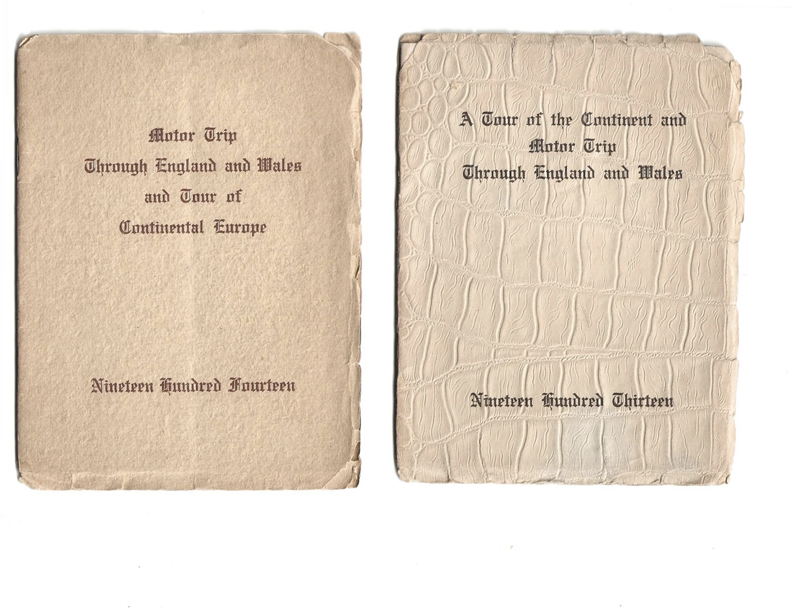


I assume all went well in 1913, since the tour organizer, Ms. Stella M. Weyer of Washington, PA, decided a repeat was in order for the next year. Perhaps she had begun what she believed would be a years-long career. Who knows?

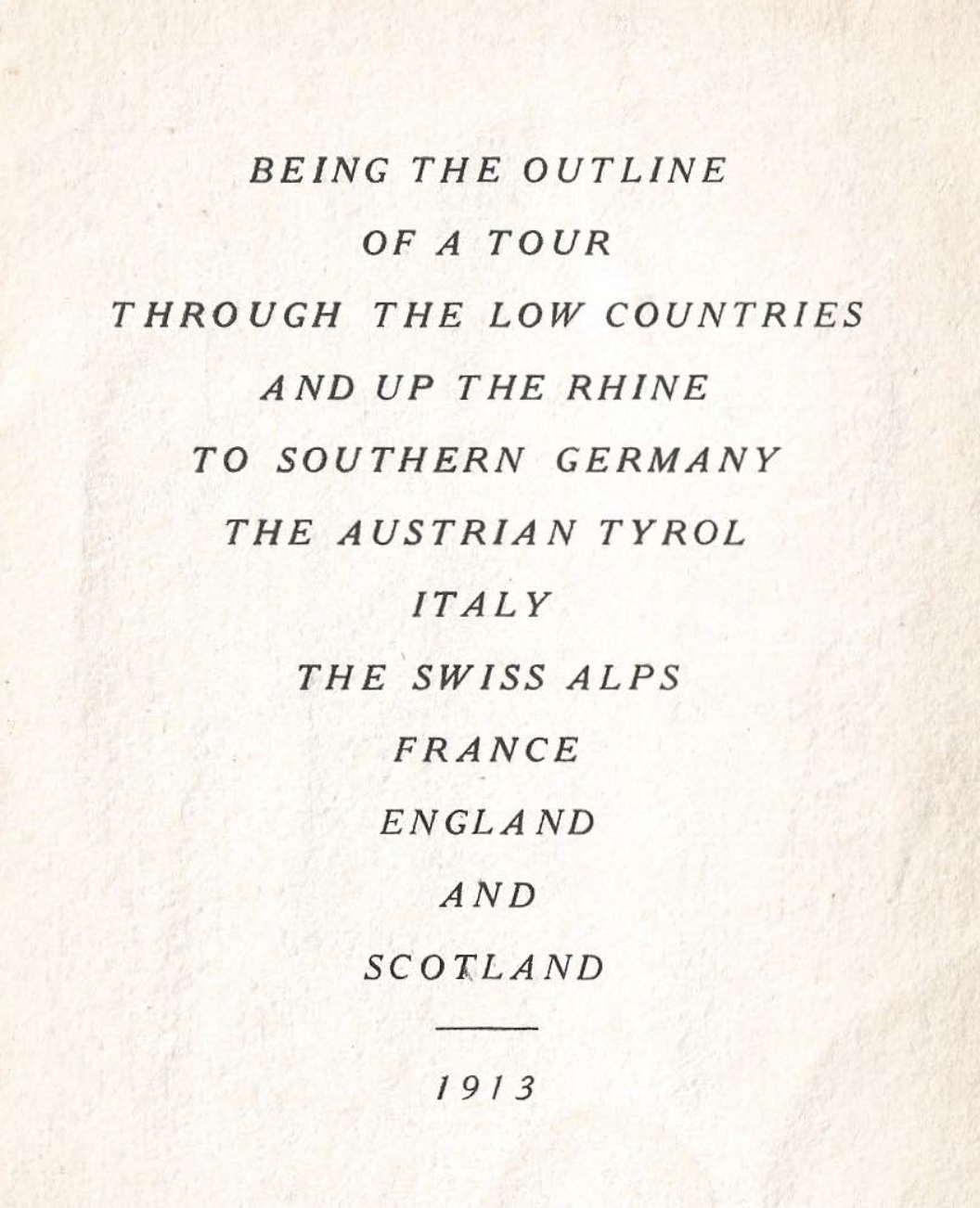
Looks like a fascinating travel plan:

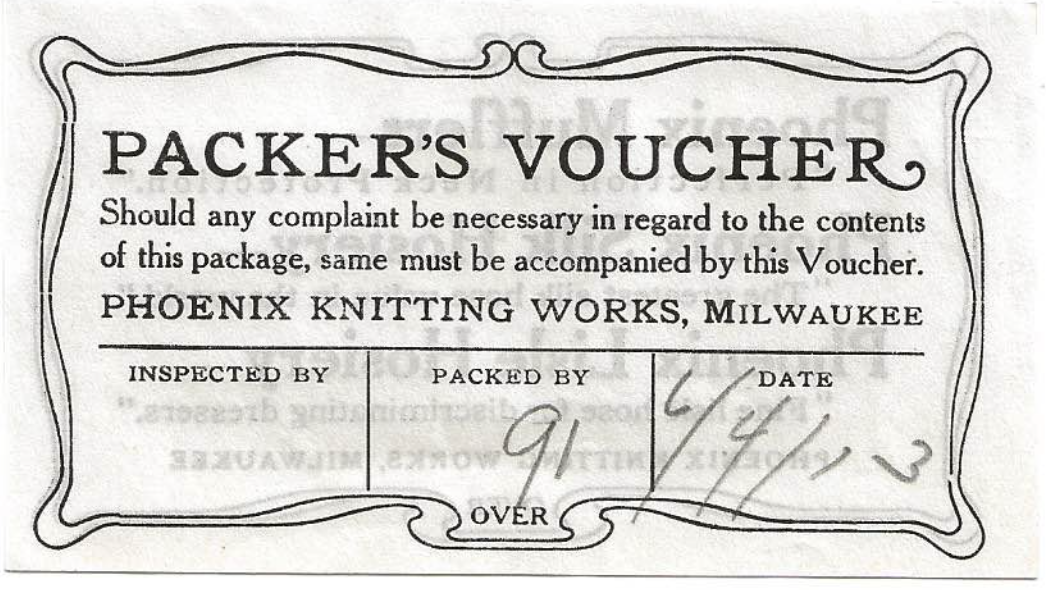
As an added item of interest, when I opened the 1913 booklet, a packer’s voucher from Phoenix Knitting Works fell out. It was dated 6/4/13. I guess someone mail ordered a scarf or something to wear on their sojourn.

Some of the tour notes telling travelers what to anticipate are a delight to read from a 2025 perspective. “Our motor cars are procured of the best London firm, are high-grade machines…driven by expert chauffeurs. The average rate of speed will approach twenty miles an hour…”

That’s 1913.

Looking at the 1914 itinerary evokes a whole different set of feelings.
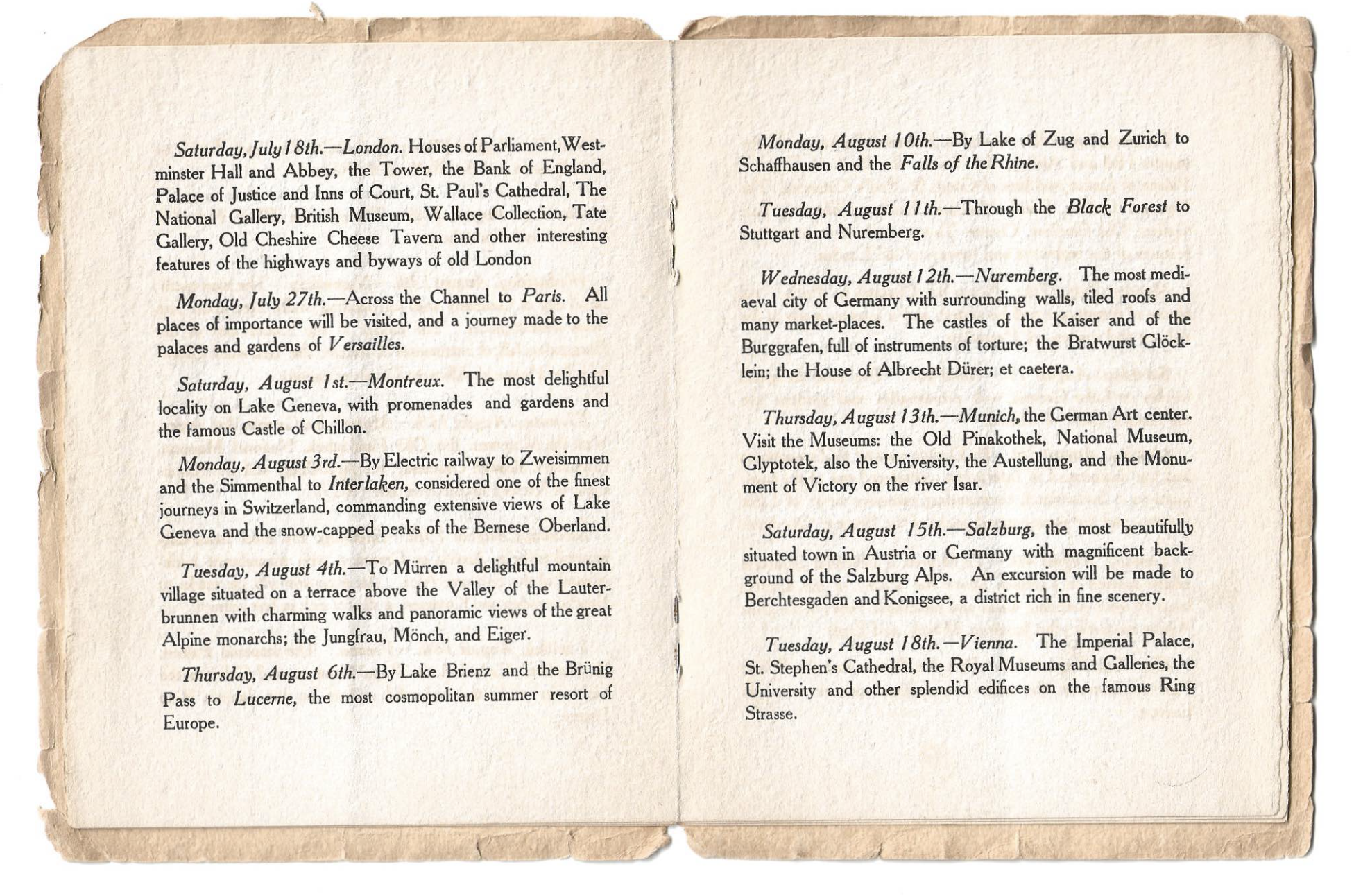


The journey was set to begin from New York on July 2, and I’m burning with curiosity to know how far the group actually made it into the trip. Did they even embark after learning of the assassination of Archduke Franz Ferdinand a few days earlier? Or were they unaware of the direction things were heading, and figured it would blow over?

July 27th has them arriving in Paris, the day before Austria-Hungary declared war on Serbia, the official beginning of World War I. Their plan for mid-August was to visit Germany and Austria. By that time, several countries had been drawn into the fight, including France, Britain, Luxembourg, Belgium and Russia.

Imagine being in the middle of what was to be your vacation of a lifetime only to find yourself witnessing the commencement of the bloodiest, most widespread war the world has ever seen. How do you get the universe to laugh? Make a plan.

I have gone down some rabbit holes trying to find any other information about these tours, specifically the fate of the 1914 venture. But no luck. I have however, learned a bit about Stella Marshall Weyer, the organizer listed in both pamphlets.

She was born in 1876 in Portsmouth, Ohio. So she would have been in her mid to late thirties when all this was going down. And she lived in St. Louis for a portion of her life, which could be related to why I found her travel plans kicking around in central Missouri more than a century later, though she never married or had children as far as I could find.

A St. Louis Post-Dispatch article from 1893 lists Stella as a new graduate of Hosmer Hall, an all-girls’ school. An 1896 society article says she’s traveling to Leipzig to visit her brother and study art. Aha! She was experienced in European travel from a relatively young age. (Sorry, these are behind a pay-walled database through my local library, so I can’t link to them.)

Most significantly, I discovered she volunteered as a Red Cross canteen worker in France during the war, returning to the U.S. in 1919, after the Armistice of November 11, 1918. It’s possible her group was in France at the outbreak of hostilities, and she just stayed there, helping. She only lived a few more years, dying in 1923 of glioma of the brain.

In the past few years, we have seen for ourselves what it’s like to live inside of history. I know I’m still reeling from the world changing virtually overnight when the pandemic hit in 2020. But coming across these artifacts and learning a little about one single person who was caught in the maelstrom of world events has added a new layer of introspection.

Maybe what I’m learning is that we, in our current time and our place, just aren’t special. We’re not exempt. Anyone anywhere can find themselves in the middle of some kind of troubles. Our choice is whether and how to do some good anyway. Stella Marshall Weyer appears to have risen to an astounding occasion and volunteered in a way that was available to her. I’m going to keep that in mind this Armistice Day/Veterans’ Day.

~~
Not Cooperstown, but Just as Important

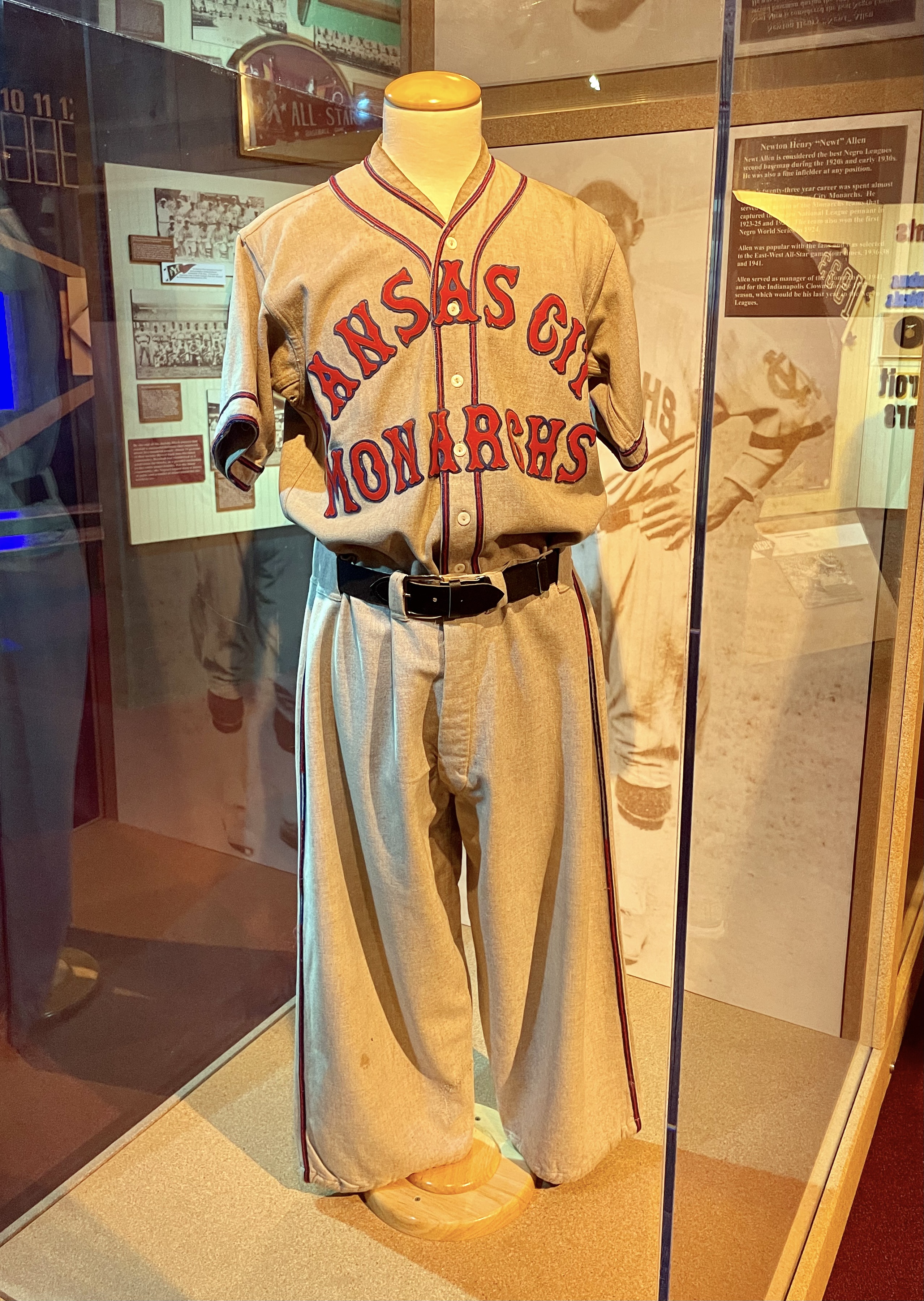
Kansas City Monarchs baseball uniform in display case

Friday, I fulfilled a bucket list item when my husband and I visited the Negro Leagues Baseball Museum in Kansas City. As anyone who knows about baseball and American history is aware, the major leagues were segregated until Jackie Robinson started at first base for the Brooklyn Dodgers in 1947. Visiting this museum, we learned a lot about how Black players persevered anyway, improving our society along the way.

The website explains: The Negro Leagues Baseball Museum is the world’s only museum dedicated to preserving and celebrating the rich history of African-American baseball and its impact on the social advancement of America. The privately funded, 501 c3, not-for-profit organization was established in 1990 and is in the heart of Kansas City, Missouri’s Historic 18th & Vine Jazz District. The NLBM operates two blocks from the Paseo YMCA where Andrew “Rube” Foster established the Negro National League in 1920.

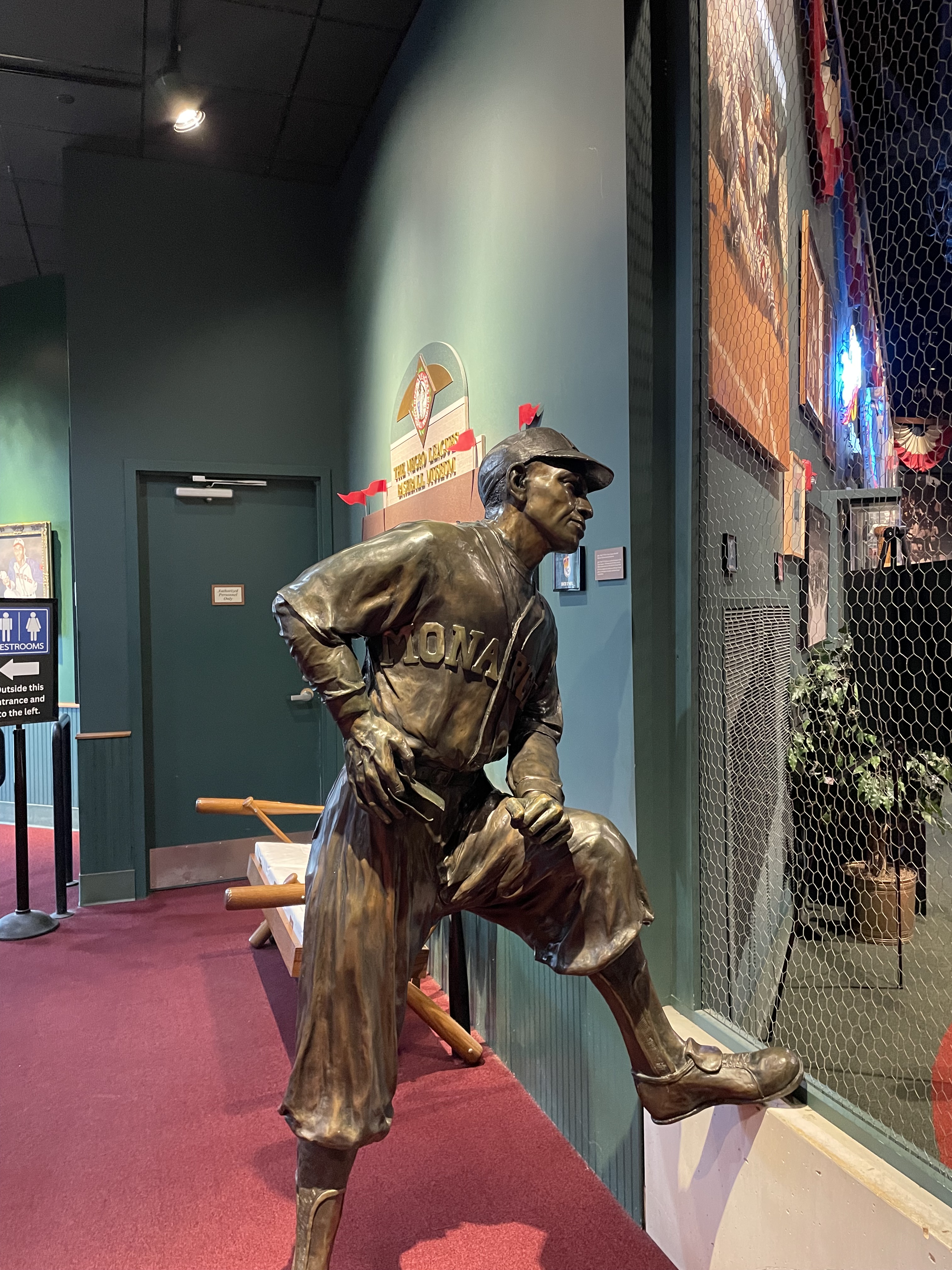
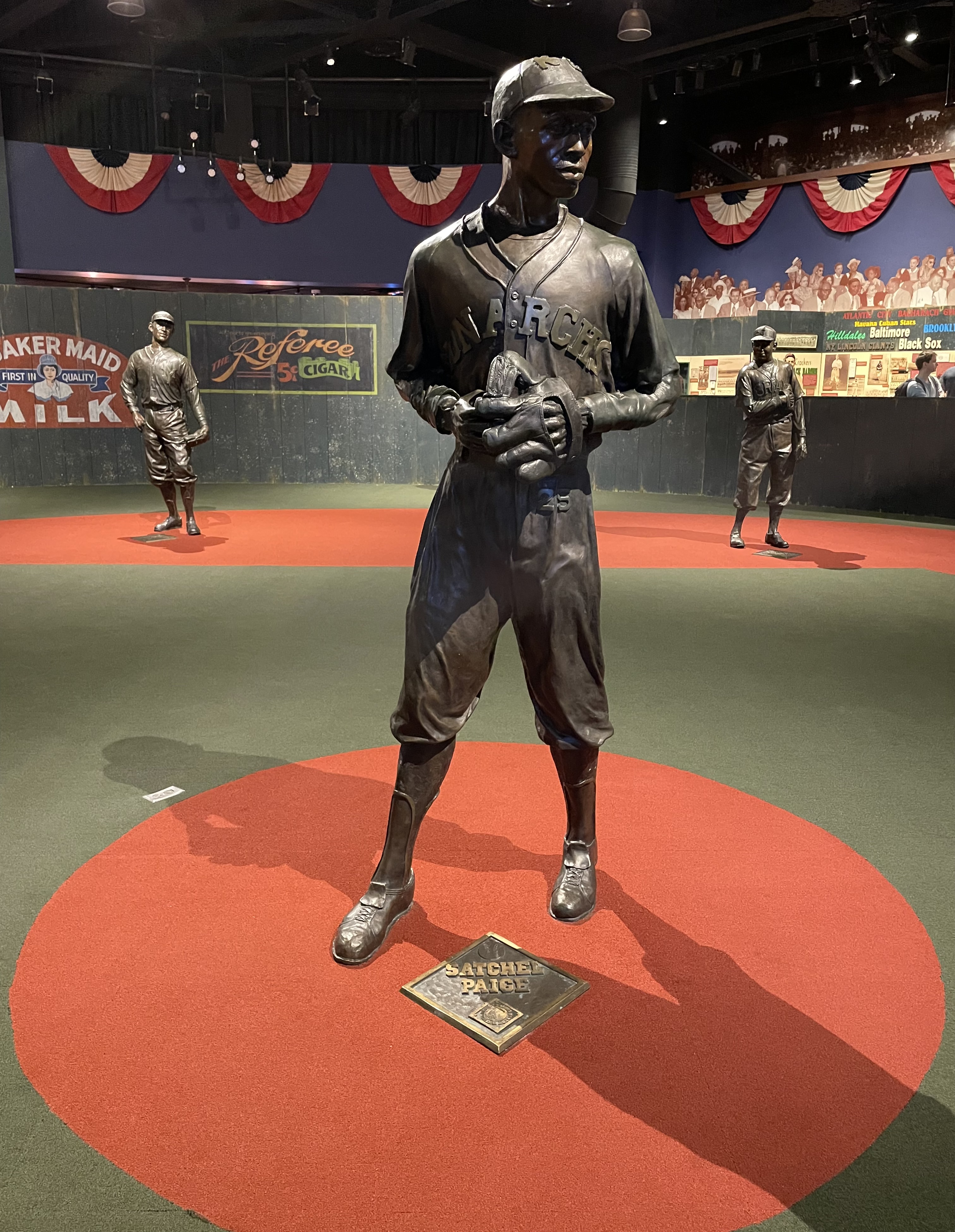
Some of the greatest athletes the game has ever seen are featured–Satchel Paige, Josh Gibson, Jackie Robinson, and more. We encountered Buck O’Neil almost right away, scouting a game:

Statue of Buck O'Neil in a Monarchs uniform
Buck O’Neil scouting a game

A short film condensed the history of MLB segregation and integration, including the shameful treatment of Black players who originally joined some of the very first teams, before they were officially banned. One influential player in particular is now known not for his skill or achievements, but just for entrenching racism in the sport. I am deliberately not giving him fame among my handful of readers. But imagine — the players he kept out went on to shine and give us so much. While his legacy is for all the bad he accomplished.


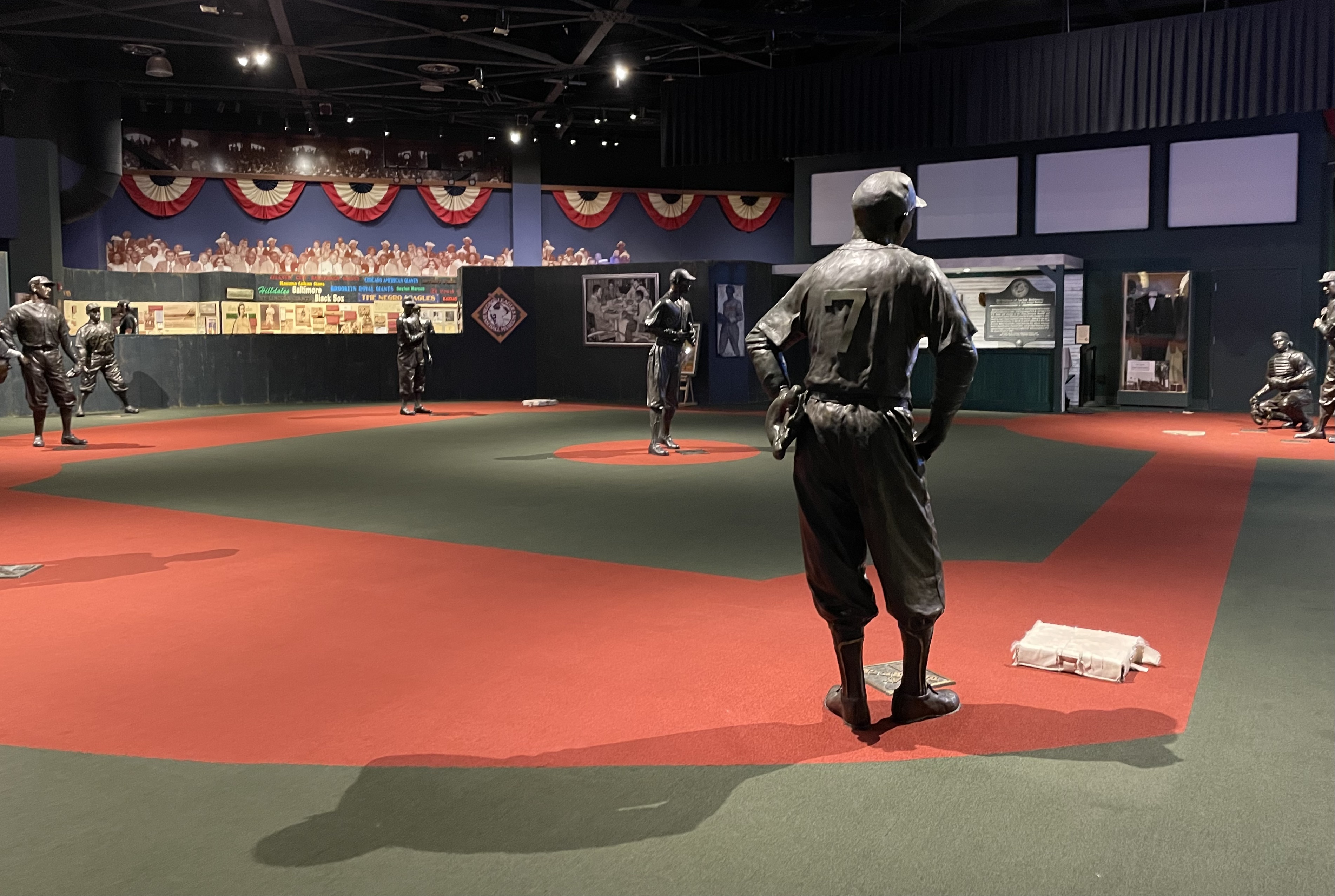
Standing among the greats


A couple of interesting tidbits I learned:
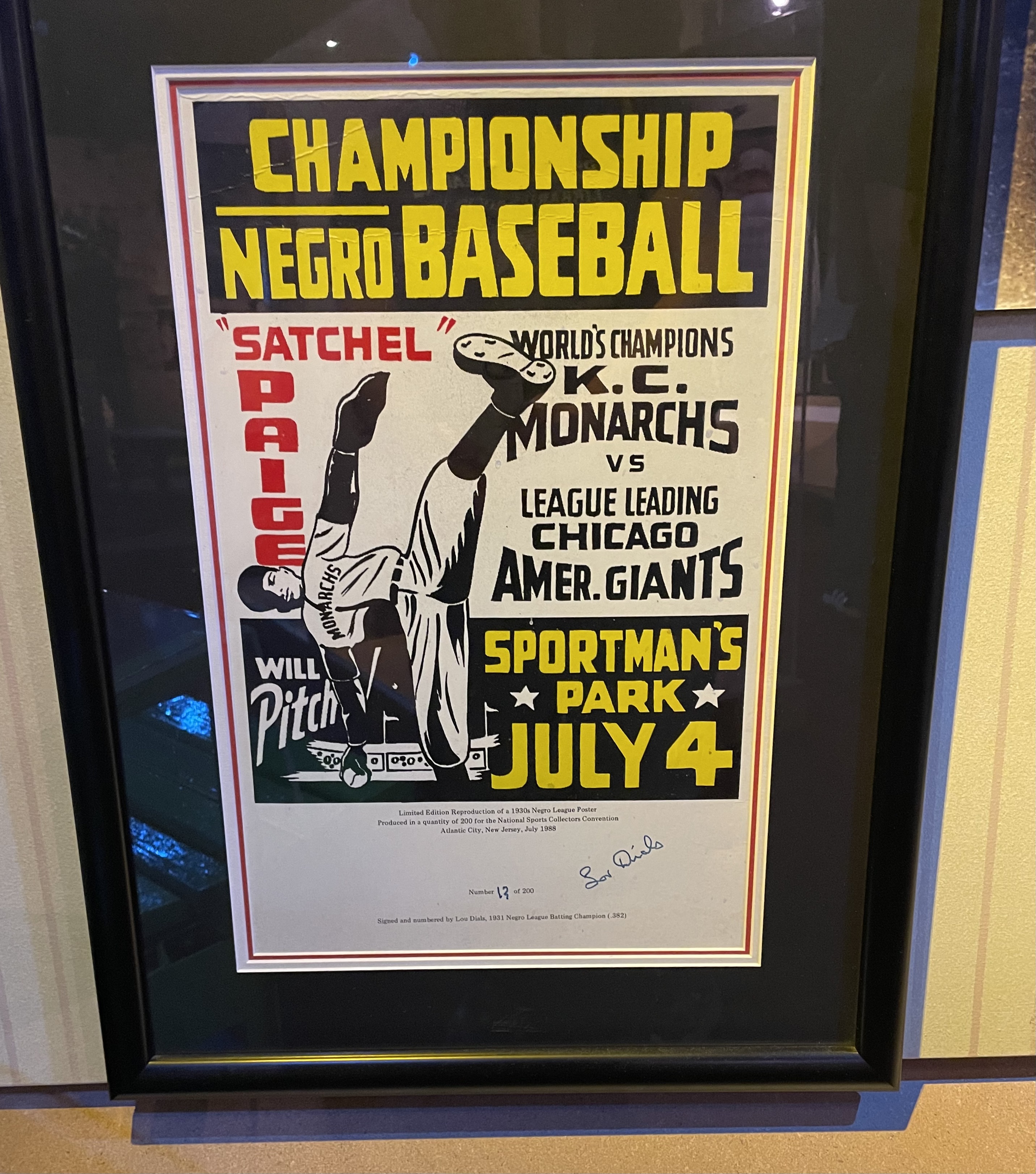
*The KC Monarchs were the first team to install lights and play games at night.
*Several of the teams traveled and played ball in Japan in the 1920s and 30s.
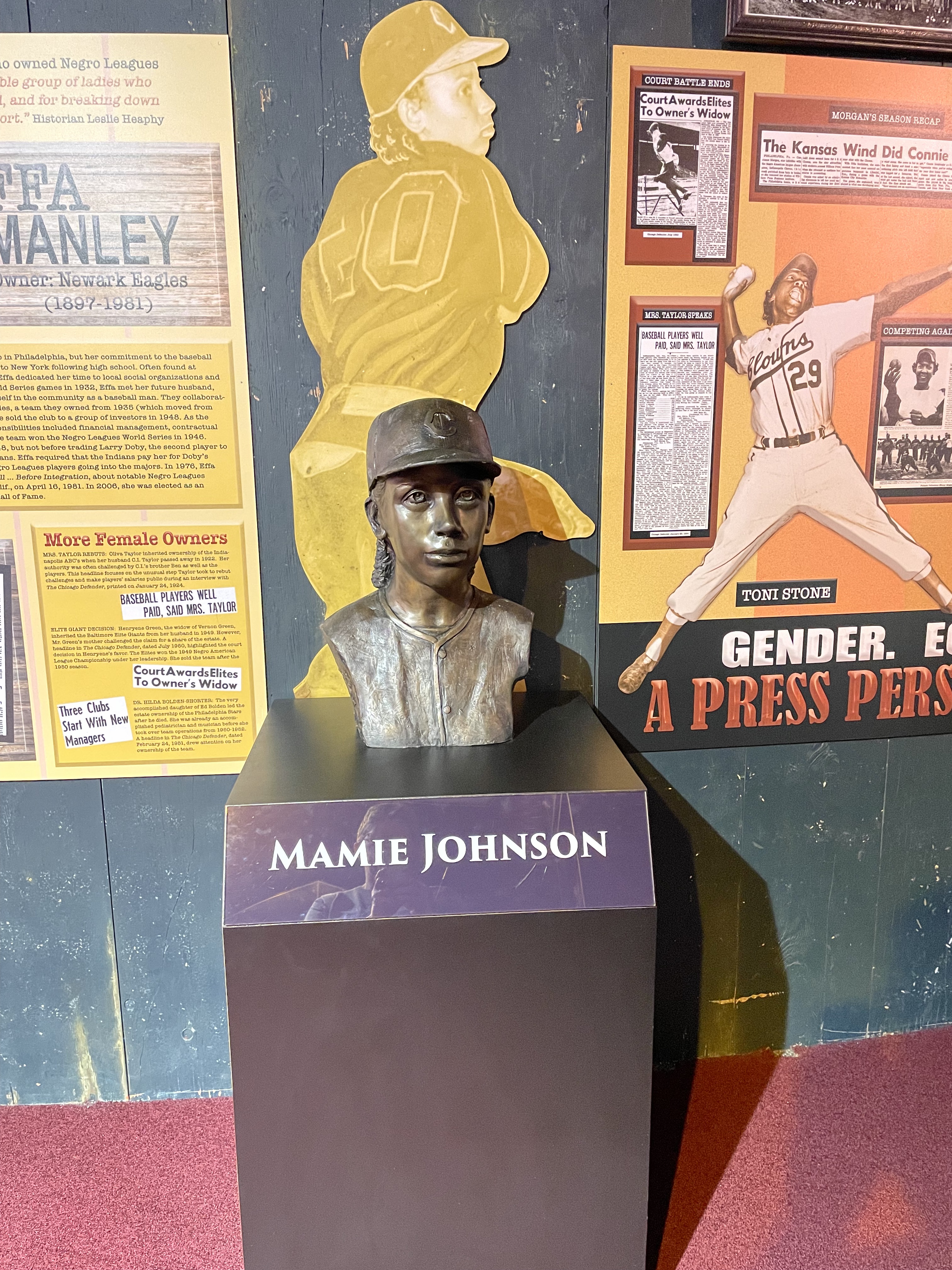
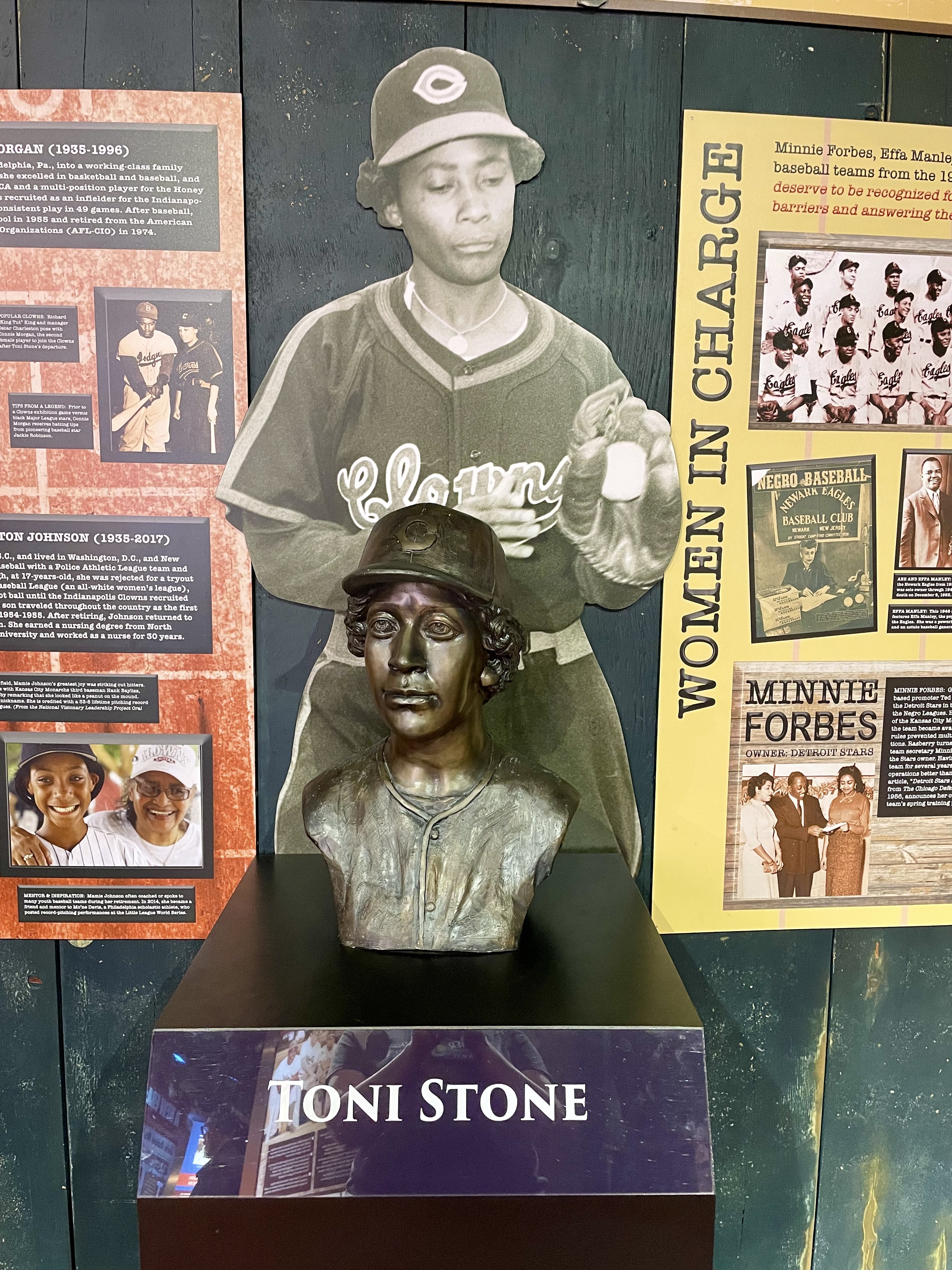
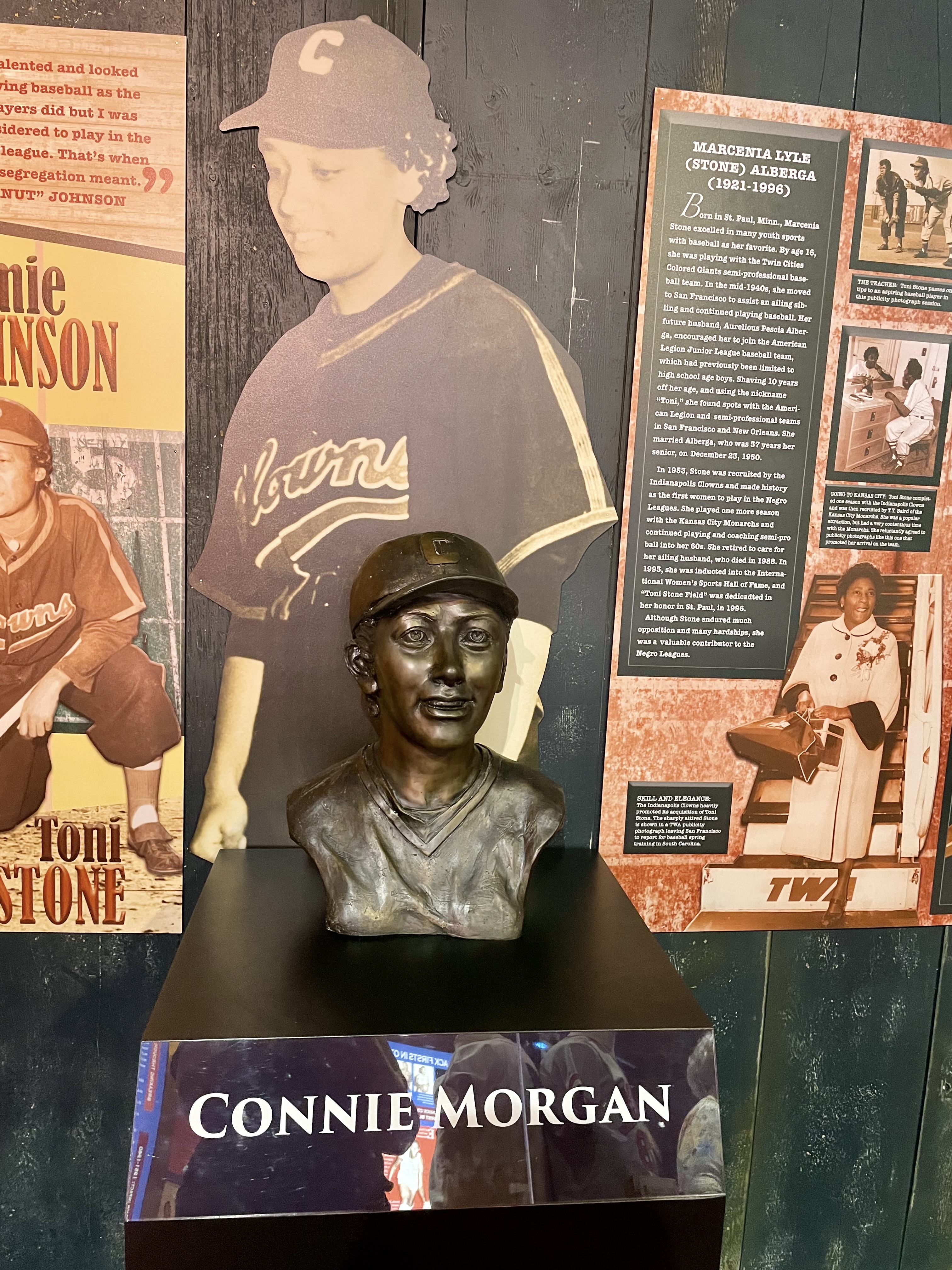
*And of particular interest for Women’s History Month, there were some women who played professionally.


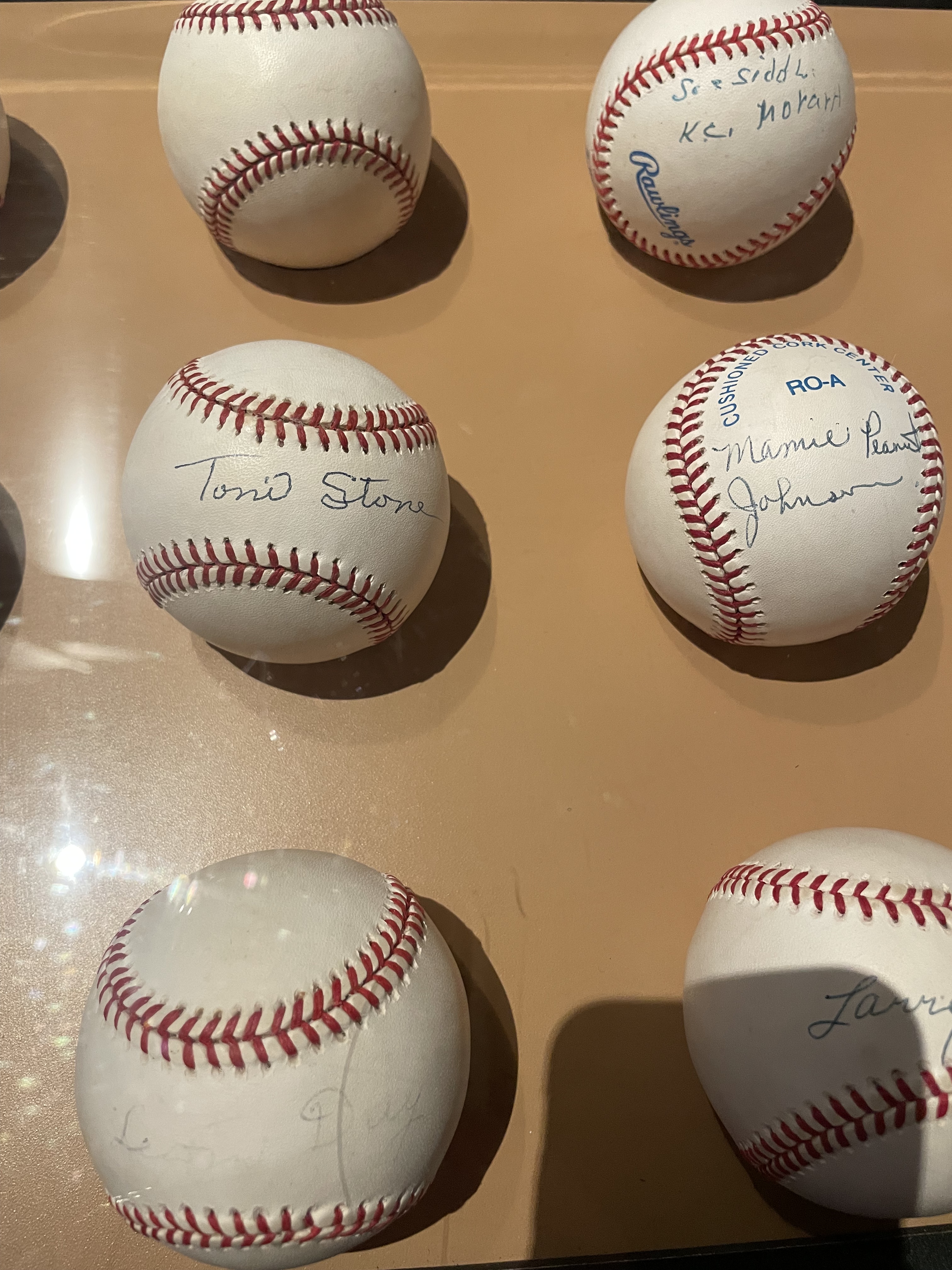
I found a couple of their autographs among the vast collection of signed baseballs.

6 autographed baseballs. One says Toni Stone, another Mamie Peanut Johnson.

I can’t help thinking how discrimination and segregation harm everyone on every side. When we exclude others for no good reason, we are not only hurting them, we’re depriving ourselves of their talents and contributions. It makes no sense, yet it’s done too often.

I highly recommend experiencing this bit of baseball history if you get the chance. The woman who sold us our tickets said the museum will be expanding and moving into a new building soon, so that’s me planning to return in the future.

~~

Remembering Coretta Scott King

“What most did not understand then was that I was not only married to the man I loved, but I was also married to the movement that I loved.” – Coretta Scott King


On Martin Luther King, Jr. Day, I’d like to take a couple of minutes to think about the person who, perhaps more than any other, made sure the message and the work of social justice continued after his death. Coretta Scott King was married to Martin Luther King, Jr. for 15 years, a full partner in leading the movement for peace and equal rights.

For another 38 years after his death, she continued leading the charge not only in the U.S., but around the world. This is taken from The King Center website. That would be The King Center that Coretta Scott King founded.

One of the most influential African-American leaders of her time, Mrs. King received honorary doctorates from over 60 colleges and universities; authored two books, edited a compilation of selected quotes by Dr. King, maintained a nationally-syndicated newspaper column, and served on and helped found dozens of organizations, including the Black Leadership Forum, the National Black Coalition for Voter Participation, and the Black Leadership Roundtable.

Mrs. King died on January 30, 2006. She was the first woman and the first African American to lay in honor in the rotunda of the Georgia capitol. Also, a few days after her death, thousands of people stood in line in the rain to pay their respects at a viewing in the heritage sanctuary of the historic Ebenezer Baptist Church in Atlanta.

The Kings taught us a lot about the importance of unity, community, and standing together with the oppressed. I believe those principles are more important today than ever.

~~