R.I.P. William Sleator

Singular author William Sleator  has passed away.

As a teen I read and re-read and re-read certain books. One of those was “House of Stairs” by William Sleator. It’s a science fictionish tale of a group of teens who are subjects in a behavior modification experiment. This book, for me, encapsulates one the most fascinating aspects of science fiction/fantasy. It explores the  question of how people will behave in unusual, even unprecedented situations.

I think this is why I tend to prefer “soft” science fiction. For me, the draw is not technology, it’s people. I love Ursula K. LeGuin for her anthropological approach. Ray Bradbury is another favorite in this area. I know some people are dismissive of genre fiction as “not serious” or something, and William Sleator was double-labeled, because he was also considered a young adult author. But I’ve read widely and eclectically throughout my life, and in my opinion, if you want fiction that explores the human psyche, you could do worse than picking up a book by Sleator.

Hmm…maybe it’s time for another reading of “House of Stairs.” I haven’t visited it in years.

The Anxiety Dreams of Writers

Right now I have 21 pieces of work – 4 stories and 17 poems – out for consideration. I know responses tend not to come in the summertime, so I’m bracing myself for rejections piling up like autumn leaves in two to three months.  Last night, I dreamed they all came at once. Every single submission was rejected on the same day, but it was all in one form. Sort of like the common application for colleges, I suppose, except there weren’t even multiple copies. It was one sheet listing everything I’d sent out everywhere and next to each entry was a red rubber stamp with the word “REJECTED” in all caps.

I woke up and mused on the fact that my unconscious has not yet adapted to the reality of most rejections happening by email now.


Joplin Tornado Relief: Writers Can Help

“The Joplin (MO) Writers’ Guild, in coordination with the Missouri Writers’ Guild, is seeking fiction, non-fiction and poetry to be included in an anthology, Storm Country, to be published near the end of the summer. All proceeds from book sales will go to the purchase of books for school libraries damaged or destroyed by the May 22nd tornado. Midwest writers are encouraged to submit their original work June 1st through July 15th.”

See http://www.missouriwritersguild.org/ for guidelines.

I Make Sun Tea Now

Sun tea is cool.

I’ve known people who came close to a complete Time Lordish, immediate regeneration, and done it successfully. Tossing away an old consumer-driven, high-spending life for one of home-spun simplicity. Deciding on a complete change of career and two years later, there they are. But, unlike the Doctor*, I’m not someone who can pull off an entire life and body makeover in one go and have it stick. I need to take my changes at a slower pace in order for them to have any staying power. I suspect I’m not alone.

Like many others, I’m making an effort at healthier, more sustainable living, but I’m pacing myself. I’ve seen enough folks go for total immersion and burn out quickly. Because it seems overwhelming, impossible even, if you have to change everything at once. So I take the “Bird by Bird” approach. For the past several years, I’ve been trying to change one thing at a time until it becomes habit. Then I move on to the next change. Some steps are big, some are tiny. But they’re taking me in the direction I want to go.

I started by being more mindful of recycling. Since we have curbside recycling where I live, this wasn’t so difficult. It was more a matter of remembering than anything. Don’t forget to flatten the cereal box and put it in the cardboard, rather than the trash. Once the neural pathways for proper sorting were established in my brain, it was on to saving bread bags for re-use.

Eight years ago, my husband and I bought a house with a large yard. For the first time in my life, I became interested in gardening and landscaping. We started growing a little of our own food. By “we”, I mean my husband does the lion’s share of tilling and planting, while I harvest and do the occasional weeding. Then I started researching native plants for other areas of the yard. I’ve put in low-maintenance, not-so-much-water-needing stuff in a couple of areas now. I have  coneflowers on one hillside and some weigela in another spot. I plan to keep adding with one plant or one small area each year. If I thought I had to do the whole yard at once, I’d never get started.

After this, we started composting.

Last year, I finally put an insulated jacket on our water heater. One more step.

We aren’t in the financial bracket to be able to replace all appliances at once, but when necessity dictates it – something breaks down beyond repair – we’ve committed to buying the most energy-efficient we can. One more step.

A couple of years ago, my husband put up clotheslines in the back yard, at my request, and it didn’t take me too long to get in the habit of using them.

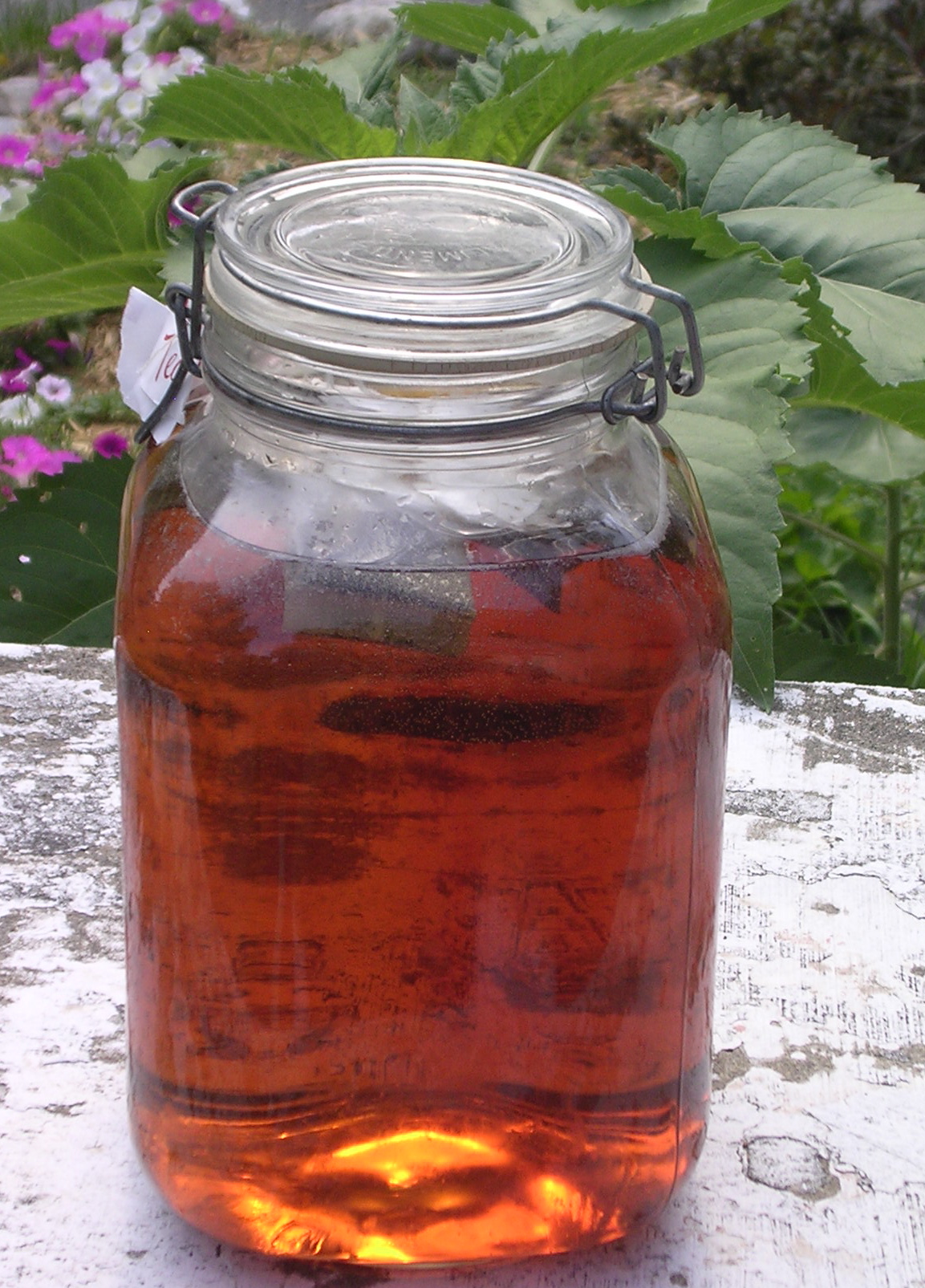
I drink gallons of iced tea every summer. Every year, I think I should get a buy a jar to use for sun brewing. This year, I decided to make sun tea my next good habit. I realized I already had an old glass canister with the rotten seal would be perfect for sun tea, as it was no longer good for storing sugar. The price can’t be beat. I buy tea bags by the 100. One big pitcher of tea, made with free solar power, costs in the neighborhood of 15 cents.

Not sure what my next ecothriftyhealthy self-improvement step will be. I’ll decide that once I realize sun tea is a habit and no longer a novelty.

^^^^^

*If you don’t know what I’m talking about, Google “Doctor Who.”

Dear Maeve Binchy

Dear Maeve Binchy,

Upon reading the first couple of chapters of Minding Frankie, I feel compelled to stage a a dialogue intervention.

Americans do not “take posts.” We “get jobs.”

Also we do not “fancy” anyone. We might “like” someone, or “like like” someone, or one of us might be “in love with” someone, or be “hot for” someone. But we don’t send emails talking about “fancying” another person.

You’re great at the relationship between characters stuff, but  perhaps you should get some help for your American dialect problem.

That’s all for now.

Mother’s Day Thoughts

One of my most memorable events in mothering happened when my daughter was around four months old. It was one of those fall days where people whose internal thermostats run hot are still wearing shorts and t’s, while those who run cold are wrapped up in their woolens.  And I had errands to do, including one to the post office.

I dressed my baby in pants, long sleeves and an adorable little sun hat that she kept snatching from her head and I kept putting back on because she was bald and pale and needed protecting from the sun. I set out on my jaunt around town, ready to bask in the adoring looks directed at the most beautiful child in the world, who happened to be with me.

Here comes the part at the post office.  I parked, removed my daughter from her car seat, and turned around to find myself face-to-face with an older woman, all bundled up, who met me with a scold “That baby’s going to freeze on a day like this. You should have it in a blanket.” I muttered something about how she usually let me know if she was uncomfortable and made my way into the building.

Stamps bought, mail mailed, baby riding on my hip, I made my way back out of the building. Only to encounter a man who felt compelled to instruct me on the dangers of overdressing a baby on such a warm day.

Thanks for the message Universe. As a mother, anything and everything I do is open to criticism from everyone I encounter. Therefore, my best bet is to use my own judgment and develop a case of selective hearing loss.

It has been my observation that mothers in general receive a lot of criticism. But most of the ones I see are doing their best, despite the slings and arrows. Happy Mother’s Day to all of the mothers who are soldiering on: from the mom soothing her crying infant in the grocery store, to the mom struggling with how much and how best to support her grown child who lives 1,000 miles away.

That one passage in a novel


    I felt the starched walls
of a pink cotton penitentiary
closing in on me.

*********

Novels are long and have plots and story arcs and subplots and things. But sometimes one single sentence or passage from a novel will stick with me for years.

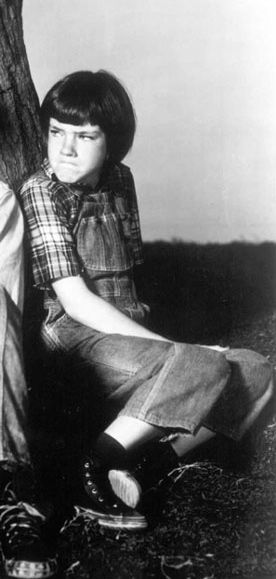
Sometimes it’s because the language is poetic. In To Kill a Mockingbird, when Scout Finch’s aunt comes to stay, she tries to turn Scout into a little lady. Scout explains her situation thus: “I felt the starched walls of a pink cotton penitentiary closing in on me.” As a lifelong tomboy, this sentence speaks to me loud and clear.

Other times I’ll remember a passage that made me think about the universe in a new way. At one point in my life, my favorite book was Harriet the Spy by Louise Fitzhugh. I’ll never forget the nanny, Old Golly, proclaiming “There are as many ways to live as there are people in the world.”

A few years later I discovered Ursula K. Le Guin’s The Left Hand of Darkness, a book that remains on my favorites list to this day. It not only shook up my thinking on gender, but also on political boundaries, when one of the characters asks a not-so-simple question:
“How does one hate a country, or love one? Tibe talks about it; I lack the trick of it. I know people, I know towns, farms, hills and rivers and rocks, I know how the sun at sunset in autumn falls on the side of a certain plowland in the hills; but what is the sense of giving a boundary to all that, of giving it a name and ceasing to love where the name ceases to apply?”

Finally, I have to admit I’m a sucker for scenes where a character quotes Shakespeare and pulls it off. I like this especially when it comes from an Average Joe type character, such Barnaby Gaitlin in Patchwork Planet by Ann Tyler. Barnaby goes through a bit of character development during the course of the story. Without giving spoilers for anyone who hasn’t read the book, there’s a scene where he recalls one poem he learned in school that he understood, a Shakespearean sonnet. He turns to another character, saying “Haply I think on thee.” You’d never predict the words coming from his mouth early in the book, but it so works by the time he says it.

Yeah, novels are long and there are big things in them: plots, story arcs and so on. But attention to detail is still important. Paying attention to getting the right words in the right order at the right place. It matters.

Poem of the Day, April 5

So far, I’m meeting my goal of writing a poem a day. Okay, I haven’t put any words down yet today, but they’re percolating. I’ll have them written before bed.

Here’s yesterday’s poem.  It’ll likely be rewritten a few times.


Geography by Disaster

Fukushima, Chernobyl
Geography learned by disaster
I look at an atlas
When people die
When buildings collapse
When leaders shoot their citizens
In the streets
When the fallout might land here

In tonight’s news I’d like to hear
About a place where today
Tulips bloomed
Fish swam in clean water
Families hiked
Women and men went to jobs
While children learned math
And have this continuation
Of life be amazement enough
To capture my attention


National Poetry Month

I’m happy to see another National Poetry Month roll around. I have been neglecting my writing, and especially my poetry for a while now. We’ve had an unusual amount of snow this year, resulting in many days out of school for my kids and lots of time spent on stuff like shoveling and sledding. I can’t say I regret the sledding, even if it was in lieu of writing. Also, I’ve been working more hours on my day job.

But now: National Poetry Month. Having an officially named month gives me a kick to do something. Ignoring those who say April is for Script Frenzy, my goal is a poem a day. I managed it last year. So far, I’m on track for this year, having written an actual sonnet today.

Here’s one of my favorite quotes about poetry:  “I was reading the dictionary.  I thought it was a poem about everything.” – Steven Wright

A Tale of Two Classrooms.

It was the best of educational experiences. It was the worst of educational experiences. It was a time in which a student could get an A on her English assignment for writing her “how-to” paper on the subject of How to Begin Your Secret Mission. It was a time in which a student could get no credit at all for writing a paper in World History with the assigned topic of “Ancient Greek Mythology” because she went beyond the rubric when she explored the sociological aspects and explained why the myths made sense in the context of the culture, when they can seem so nonsensical today. It was a time in which English teachers were lauded and World History teachers reviled within certain households. Creativity was nurtured and creativity was punished; individuality was encouraged and rigid conformity was enforced. Students were going directly on to brilliant college success because of their abilities to stretch their minds; students were headed to a life selling items that fell off of trucks because of their inabilities to follow directions to the letter. It was an American girl’s sophomore year in high school. The two classrooms were in the same building, but may as well have been on different planets.

Does any of this sound familiar? If you have a child in public school, I’ll bet it does. If there’s one thing I’ve learned from seeing my kids go through the school system, it’s that the administration can be good, bad or indifferent, and so can the curriculum. But it’s the classroom teacher who makes the most difference between a good educational experience and a bad one. If you’ve had a good teacher, remember to thank him or her.

Those are my thoughts for today.