I strolled my neighborhood in unseasonably temperate weather, perfect for a walk — the last few warm hours before a predicted winter storm.
I heard leaf blowers, but never saw them. I saw people raking the brown, drying remnants of autumn, and running them over with mulching mowers. I saw a family taking photos of their toddlers playing in a leaf pile. At one house, a determined man used a front-loading Bobcat to push the masses of leaves from his lawn into one big stack near the edge.
Maybe I should have been have been doing yard work instead of playing tourist to all of the neighbors doing theirs. I still have undone weeding, left over from the summer. On the other hand, the mess of my yard might not be visible under the snow by this time tomorrow.
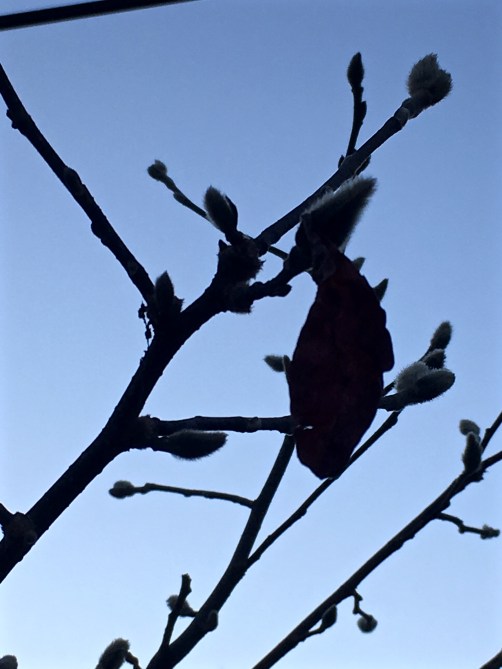
The bodies of the leaves are gone, but their spirits have not yet crossed over:
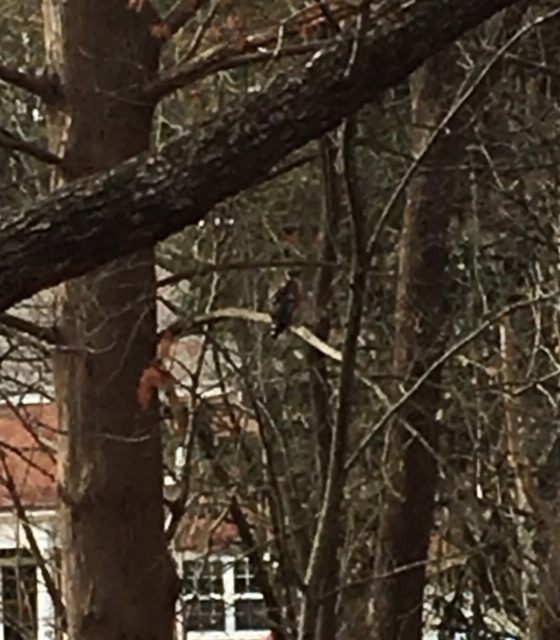
A red-tail hawk glided to the ground, not twenty feet from me. I’d never seen the wingspan of one from so close. It wasn’t a swooping prey snatch. The bird stopped and sat, looking intently at the ground, channeling its inner robin.
I stopped in my tracks. Nobody else nearby to startle it. But the slow draw of a phone from my coat pocket was enough to send it flying up to a tree limb. I tracked it and took a photo, but couldn’t zoom in enough to get a sharp image.
So it was memory already, the details no longer available, except what welled in me when I saw those substantial, functional, wings of power spread so near. The feeling remains vivid.
The visual details fade. Here’s what I have:
Photo and words both so inadequate to convey the experience.
Note: Posting a day late, but didn’t change the title.
I walk a fair amount. I usually commute to work on foot. I also walk recreationally. It occurred to me to share what I encountered. I know I’m not winning any awards with my photos. I’m as amateur as they come. But here’s life as I see it.
On today’s walk, carpets of leaves:
This slideshow requires JavaScript.
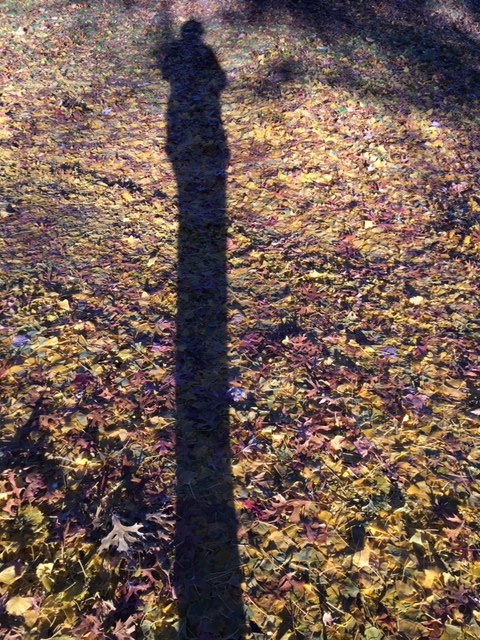
My own elongated shadow:
A large deer in someone’s yard. Some kids off-camera called to him, “Here Bucky. Bucky, Bucky.” Until he turned to face them. Then one of them yelled, “Run, before he stabs us with his horns!” Spoiler: there was no horn stabbing.
Look behind the bench.
What you looking at there behind that bench?
I perambulated 1.75 miles, just around the neighborhood.
Interesting fact: you don’t have wait for New Year’s Day to start working on a goal. This November 11 marks the 100th anniversary of the Armistice that silenced the guns of World War I, or the Great War as it was called at the time. It had been one of the largest and bloodiest conflicts in the history of humankind, resulting in millions of deaths and immeasurable pain and suffering.
By the time it ended, the world was hungry for peace. It was supposed to be the “war to end all wars” yet many of the wars that have followed had roots in that conflict. It turns out peace isn’t something you get once, set on a shelf to admire and there it stays forever. Peace requires an active, sustained effort, always. We will never have to stop working for it.
Robert F. Kennedy said, “Each time a man(sic) stands up for an ideal, or acts to improve the lot of others, or strikes out against injustice, he sends forth a tiny ripple of hope, and crossing each other from a million different centers of energy and daring, those ripples build a current that can sweep down the mightiest walls of oppression and resistance.”
And Desmond Tutu has said, “Do your little bit of good where you are; it’s those little bits of good put together that overwhelm the world.”
So my Armistice Day resolution is to do my little bit, starting with internal work, to create a ripple. To actively look for little bits of good I can do where I am each day.
A friend of mine recently passed away after a six-year struggle with cancer. She was truly a light in the world — one of those individuals who inspires the best in others. After the last presidential election, when many of us were on social media discussing what we could do, or what we would do to try to save the world, she posted that she was in the middle of chemo treatments and much too weak to go to meetings or phone bank or march. But she would spend some time each day on loving kindness meditations. That was her ripple.
I have decided, though it won’t be the whole of my action, I will try to help that ripple spread by focusing on the same thing as my main goal. My first concrete step is peace within myself, so I can then work on the world. In that spirit, and to honor my friend’s memory, I have the goal to engage in a loving kindness meditation at least four mornings a week. From there, my actions can build.
I love a redemption story as much as anyone. But there are certain necessary elements — remorse, concern for people who may have been hurt, an attempt to make amends, a change in behavior going forward. If those pieces are missing, it’s not a redemption arc. It’s a story of a stunted character trying to shirk responsibility.
Patricia Highsmith is the only author that immediately comes to mind who successfully made a character like this the main focus of her stories. Usually, a character of this nature would have a starring role only as an antagonist to the hero. And if said character gains power, that’s not evidence of redemption. That’s just upping the stakes.
Yes, these thoughts were prompted by current events.
How’s your blood pressure? Edging up a little, like everyone else’s? Are you feeling overwhelmed by the daily news? We all could use some reading material that will buoy us right about now. I have put together a list for just this purpose. I’m sticking to nonfiction for now, out of a personal desire to remember the positives in the real world. Some of these books contain tragic elements, but also the overcoming of such. Here are a dozen titles I hope will comfort, inspire, amuse and make you feel better about the world.
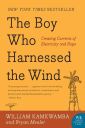
The Boy Who Harnessed the Wind by William Kamkwamba. My son told me this was the most inspiring book he’s ever read. Possibly the world’s most resourceful teenager builds a windmill from scraps he’s foraged and brings electricity to his village in Malawi.
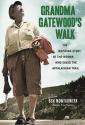
Grandma Gatewood’s Walk by Ben Montgomery. The story of an average woman who decided to do something with herself after leaving an abusive marriage. She liked to walk. Long story short, we can thank her for the preservation of the Appalachian Trail.
The Boys in the Boat by Daniel James Brown. I never would have picked up this book if it had not been chosen for our community-wide reading selection a few years ago. Now I recommend it to everyone. If you’re in the mood for a tale of overcoming adversity to achieve something great through the virtues of teamwork and cooperation, this book is for you.
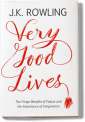
Very Good Lives by J.K. Rowling. A small volume containing the Harry Potter author’s commencement speech on the benefits of failure.
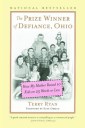
The Prize Winner of Defiance, Ohio by Terry Ryan. The subtitle for this is “How My Mother Raised 10 Kids on 25 Words or Less.” If we could bestow posthumous Nevertheless She Persisted prizes, Evelyn Ryan would surely qualify. A genius at advertising jingles, she kept her family in laundry detergent, appliances and adequate housing by winning contest after contest.
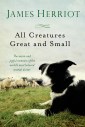
All Creatures Great and Small by James Herriot. Funny and (mostly) affirming anecdotes from the life of a country veterinarian. There are a few sequels if this one leaves you wanting more.
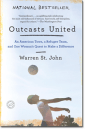
Outcasts United by Warren St. John Refugee youths from disparate backgrounds come together to form an American soccer team.
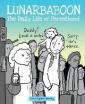
Lunarbaboonby Chris Grady. Cartoons depicting the life of a woke moon monkey dad.
She Got Up Off the Couch by Haven Kimmel. I laughed. I cried. I cheered, as the author’s mother fights her way out of the depression that kept her glued to the couch for years and overcomes every obstacle to make a better life for herself.
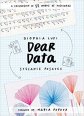
Dear Data by Giorgia Lupi. Where art, friendship and data all merge, you’ll find this book.
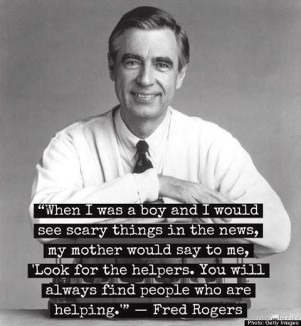
We didn’t have a television when my kids were little. We occasionally popped a DVD into the computer for them, but TV as such didn’t come into their lives until they were out of grade school. The only thing I’m sorry they missed was Mister Rogers’ Neighborhood. we did read some of his books and we owned a cassette tape of his songs that they listened to again and again. So he still influenced their lives.
These days I work in a public library. Fifteen years after Fred Rogers passed away, parents are still coming in looking for his books to help their children through difficult issues. One mom recently said to me, “My first thought when I was trying to figure out how to help my son (through a loss) was, there has a be a Mister Rogers book we can find.”
Over the weekend I went with my husband and 20-year-old son to see Won’t You Be My Neighbor? — the documentary about Fred Rogers. My husband might have made it through with dry eyes. Maybe. Neither my son nor I did.
Spoiler: Was Mister Rogers really like that? According to everyone interviewed in the movie, yes, absolutely. The movie didn’t paint Fred Rogers as perfect and all-knowing. It showed how he had some growing to do through the years on some issues and that he struggled with self-doubt. He was human, but a pretty gosh-darned exemplary human.
The truly great thing about Mister Rogers was that he didn’t lie to children. He took on tough, tough subjects and let kids have their feelings about them. He never pretended children’s lives were easy. He never said, don’t be scared or don’t be angry. The vital part of his message lay in telling children those feelings are to be expected sometimes, but that there are healthy ways to express them and that you will survive having them. He also deconstructed gender stereotypes by showing that a man could be a gentle, patient, nurturer.
My newly grown son was a child who needed gentle, patient, listening adults in his life. After the movie, he seemed profoundly moved. All he could say at first was, “He really understood children and what they need.” Later we talked some more about the bigger philosophy of Mister Rogers and his message of unconditional love.
Go see the movie if you can at all. It’s a needed reminder in these dark times that there are people who strive for goodness and kindness, people who dedicate their lives to making the world better. It’s also a good reminder that heroism comes in many forms, including quiet small acts such as inviting someone of another race to soak his feet in your pool at a time when public pools were segregated.
I came away inspired to be my best self. I will try to be the person Mister Rogers believed I could be. And I will remember that even he had self-doubt, but he kept working anyway.
My year in review, in terms of moods and emotions.
January: Anxiety, shock. Impending doom. Grasping at straws of hope, picking up pieces of shattered wishes. The coldest January 20th ever, the world upended. A plunging of the stomach. Fury. Sick fear. Solidarity.
February: Calls and calls and calls. Emails and emails and emails. Postcards and postcards and postcards. Small personal triumphs. Small personal resignations. Heels dug in. Grappling.
March: Nurturing others and myself. Sitting with. Starting seeds: literal physical plants and new beginnings for myself. Trying to allow myself to bloom. Focusing close to home.
April: A few sprouts, a few false starts. A little cutting loose. Seeking of wisdom and camaraderie.
May: Nostalgia. Celebration. Family. Care-taking.
June: Opening. Doing. Self care. Moments of peace and fulfillment.
July: A dreaded ordeal. Survival. Defiance. Resistance. Resilience.
September: Improving what I can. Projects. Sorting. Aesthetics.
October: Planning and researching. New goals.
November: Setbacks. Doggedness, determination. Grindstone. Head down.
December: Repeatedly dragging myself back from the brink of despair. Grim realizations. Surviving. Teetering. Holding close. Looking for the light, making the light, being the light.








 The Boy Who Harnessed the Wind
 Grandma Gatewood’s Walk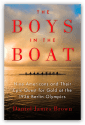


 aboon
aboon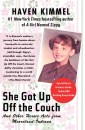
 Nomadic Noesis