Books That Scared Me Silly

In honor of my favorite holiday, here’s a handful of books that scared me silly even as they were refusing to be put down. The fear came in a different flavor with each one. Not all of them are technically horror novels.

I Am Legend by Richard Matheson. For years – literally years – after I read this, I had nightmares about discovering that everyone in my life had become vampires. What if you were the last person on earth, so far as you knew, who had not been turned into a vampire? What if they came for you every single night? Brilliant book, but save up your money first to pay for the increase in your electric bill from sleeping with the lights on.

Sharp Teeth by Toby Barlow. What’s so scary about werewolves is that they’re us. It’s been my observation that werewolves have been the most sympathetically portrayed monsters in horror. In Sharp Teeth, Barlow is masterful at building non-stock, well-developed lycanthropes. In verse. Did I mention he does it in verse? What made this book nail-biting for me was how much I cared about a couple of the characters and how human nature was just as threatening as animal nature. This is one of my all-time favorite books in any genre.

1984 by George Orwell.  I value my privacy. The thought of being watched every second of my life is anathema to me.  For the watched, even one slip-up in something as minor as facial expression can mean death. Add in the inability to trust anyone else and  the constant head games played by the government and this is about as dystopian as it gets. Scary because it seems so possible. Oh, and the rats.

The Handmaid’s Tale by Margaret Atwood. Again, scary because I can imagine it happening in real life. Extreme religious fundamentalists take over and implement selective Biblical practices. Not the ones about the rich selling what they have and giving money to the poor.  Rather, the ones where many women are considered as no more than property and are pressed into service to bear children for those who have been rendered infertile by a wrecked environment. And as someone with severely dry skin, let me say how horrified I was by the lack of hand lotion.

The Dollhouse Murders by Betty Ren Wright.  This is theoretically a children’s book. I read it as an adult and it creeped me out no end. But it impressed me, too, with its exceedingly clever premise. A big old house, with one room containing a dollhouse that’s a scale-model reproduction of the real domicile, including the furniture and dolls representing the original residents. Each night, the furniture and dolls are moved around to re-create a murder scene. Is it the victim’s ghost trying to communicate in some way?

Dracula by Bram Stoker. In the novel, Renfield scares me more than Dracula does. Actually, that’s true in some of the movie versions as well.

Beloved by Toni Morrison. There are ghosts and then there are GHOSTS. Knowing I would have reacted just as Sethe did and thrown away everything. That part gets me. The parts based on the true history of slavery are the scariest, though.

 

R.I.P. William Sleator

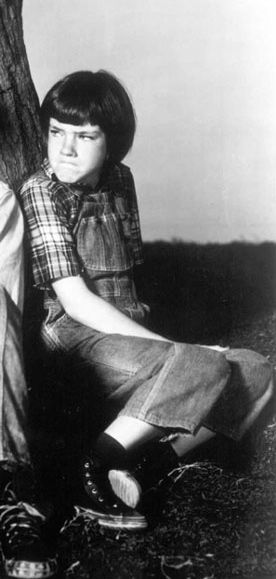
Singular author William Sleator  has passed away.

As a teen I read and re-read and re-read certain books. One of those was “House of Stairs” by William Sleator. It’s a science fictionish tale of a group of teens who are subjects in a behavior modification experiment. This book, for me, encapsulates one the most fascinating aspects of science fiction/fantasy. It explores the  question of how people will behave in unusual, even unprecedented situations.

I think this is why I tend to prefer “soft” science fiction. For me, the draw is not technology, it’s people. I love Ursula K. LeGuin for her anthropological approach. Ray Bradbury is another favorite in this area. I know some people are dismissive of genre fiction as “not serious” or something, and William Sleator was double-labeled, because he was also considered a young adult author. But I’ve read widely and eclectically throughout my life, and in my opinion, if you want fiction that explores the human psyche, you could do worse than picking up a book by Sleator.

Hmm…maybe it’s time for another reading of “House of Stairs.” I haven’t visited it in years.

Dear Maeve Binchy

Dear Maeve Binchy,

Upon reading the first couple of chapters of Minding Frankie, I feel compelled to stage a a dialogue intervention.

Americans do not “take posts.” We “get jobs.”

Also we do not “fancy” anyone. We might “like” someone, or “like like” someone, or one of us might be “in love with” someone, or be “hot for” someone. But we don’t send emails talking about “fancying” another person.

You’re great at the relationship between characters stuff, but  perhaps you should get some help for your American dialect problem.

That’s all for now.

That one passage in a novel


    I felt the starched walls
of a pink cotton penitentiary
closing in on me.

*********

Novels are long and have plots and story arcs and subplots and things. But sometimes one single sentence or passage from a novel will stick with me for years.

Sometimes it’s because the language is poetic. In To Kill a Mockingbird, when Scout Finch’s aunt comes to stay, she tries to turn Scout into a little lady. Scout explains her situation thus: “I felt the starched walls of a pink cotton penitentiary closing in on me.” As a lifelong tomboy, this sentence speaks to me loud and clear.

Other times I’ll remember a passage that made me think about the universe in a new way. At one point in my life, my favorite book was Harriet the Spy by Louise Fitzhugh. I’ll never forget the nanny, Old Golly, proclaiming “There are as many ways to live as there are people in the world.”

A few years later I discovered Ursula K. Le Guin’s The Left Hand of Darkness, a book that remains on my favorites list to this day. It not only shook up my thinking on gender, but also on political boundaries, when one of the characters asks a not-so-simple question:
“How does one hate a country, or love one? Tibe talks about it; I lack the trick of it. I know people, I know towns, farms, hills and rivers and rocks, I know how the sun at sunset in autumn falls on the side of a certain plowland in the hills; but what is the sense of giving a boundary to all that, of giving it a name and ceasing to love where the name ceases to apply?”

Finally, I have to admit I’m a sucker for scenes where a character quotes Shakespeare and pulls it off. I like this especially when it comes from an Average Joe type character, such Barnaby Gaitlin in Patchwork Planet by Ann Tyler. Barnaby goes through a bit of character development during the course of the story. Without giving spoilers for anyone who hasn’t read the book, there’s a scene where he recalls one poem he learned in school that he understood, a Shakespearean sonnet. He turns to another character, saying “Haply I think on thee.” You’d never predict the words coming from his mouth early in the book, but it so works by the time he says it.

Yeah, novels are long and there are big things in them: plots, story arcs and so on. But attention to detail is still important. Paying attention to getting the right words in the right order at the right place. It matters.

People Do Still Read

Despite the predictions made ever since the advent of television, my observation is that people do still read books. I work in a library, so I’m in a position to see this. Our circulation numbers go up every year. Okay, part of those stats come from dvd check-outs. But our book circulation is going up, too.

One thing I’ve noticed is that movies don’t necessarily supplant books. It’s not an either/or question, whether to see the movie or read the book. A lot of people do both. With the recent release of the movie, True Grit, our library suddenly has a waiting list for the book. The same thing happened with Shutter Island. When Harry Potter and the Deathly Hallows, P1 showed up in theaters, we were left with a couple of nearly empty shelves in the “R” area of children’s fiction, as patrons were interested in all of the books in the series.

My anecdotal evidence suggests we are not living in a post-literate society and are not going to be any time soon.

And the Winners Were…

2010 Award Books

A lot of awarding went on in 2010. The following is a by-no-means-comprehensive list of prize winners.

Anthony Awards (Mystery)

Novel:  The Brutal Telling by Louise Penny

First Novel:  A Bad Day for Sorry by Sophie Littlefield

Paperback Original:  Starvation Lake by Bryan Gruley

Caldecott Medal (Illustration in Children’s Books)

The Lion and the Mouse illustrated and written by Jerry Pinkney

Coretta Scott King Awards (Children’s)

Author:  A Bad Day for Outlaws: The Remarkable Life of Bass Reeves, Deputy U.S. Marshall by Vaunda Micheaux Nelson; illustrated by R. Gregory Christie

Illustrator:  My People illustrated by Charles R. Smith, Jr., written by Langston Hughes

Hugo Awards (Science Fiction)

Novel: The City & The City by China Mieville, and (tie)
The Windup Girl by Paolo Bacigalupi

Novella:  Palimpsest by Charles Stross

There are a lot more categories. Check them out.

Lambda Literary Awards (LGBT)

Children’s/Young Adult:  Sprout by Dale Peck

Nonfiction:  The Greeks and Greek Love by James Davidson

Many, many more categories. Please check web site.

The Mann Booker Prize (Fiction)

The Finkler Question by Howard Jacobson

Michael L. Printz Award (Young Adult Literature)

Going Bovine by Libba Bray

National Book Awards

Fiction:  Lord of Misrule by Jaimy Gordon

Nonfiction:  Just Kids by Patti Smith (editorial comment: YAY!)

Poetry:  Lighthead by Terrance Hayes

Young People’s Literature: Mockingbird by Kathryn Erskine

National Outdoor Book Awards

Nature and the Environment:  Adventures Among Ants: A Global Safari With a Cast of Trillions by Mark W. Moffett

Natural History Literature:  An Entirely Synthetic Fish: How Rainbow Trout Beguiled America and Overran the World by Anders Halverson
&  The Sound of a Wild Snail Eating by Elisabeth Tova Bailey

Children’s:  Camping With the President by Ginger Wadsworth; illustrated by Karen Dugan

They have more categories. Click the link above to see.

Newbery Medal (Children’s Literature)

When You Reach Me by Rebecca Stead

PEN/Faulkner Awards (Fiction)

War Dances by Sherman Alexie

Pulitzer Prize

Fiction:  Tinkers by Paul Harding

History: Lords of Finance: The Bankers Who Broke the World by Liaquat Ahamed

Biography:  The First Tycoon: The Epic Life of Cornelius Vanderbilt by T.J. Stiles

Poetry:  Versed by Rae Armantrout

Pura Belpre Awards (Latina/Latino author/illustrator)

Author:  Return to Sender by Julia Alvarez

Illustrator:  Fiesta!: Celebrate Children’s Day/Book Day; Celebremos El día de los niños/El día de los libros , illustrated by Rafael López, written by Pat Mora

RITA Awards (Romance)

Young Adult Romance:  Perfect Chemistry by Simone Elkeles

Inspirational Romance:  The Inheritance by Tamera Alexander

Novel with Strong Romantic Elements: The Lost Recipe for Happiness by Barbara O’Neal

Historical Romance:  Not Quite a Husband by Sherry Thomas

First Book:  One Scream Away by Kate Brady

There are even more categories. Check out the website, linked above.

Robert F. Sibert Informational Book Medal

Almost Astronauts: 13 Women Who Dared to Dream by Tanya Lee Stone

Toronto Book Awards

The Carnivore by Mark Sinnett

World Fantasy Awards

Novel:  The City & The City by China Mieville

Happy reading!


Bibliophile’s Ultimate Holiday Gift

Are you looking for the ultimate holiday gift for the bibliophile in your life? How about…

http://www.dbrl.org/files/RFP-2010-12-bookmobile.pdf

Wouldn’t it be cool to own a bookmobile? I believe in some alternate universe, I do own one. I travel the continent in it. I have a writing space set up in it. I drive from book signing to book signing, reading to reading. And I can sell my books right from the bookmobile, which incidentally sounds a lot like the Batmobile, something that makes it even cooler.

Sadly, I feel the need to tack a cautionary note here: Please don’t anyone think it would be cute to contact the seller if you aren’t serious about buying. The intention of this post isn’t to create harassment for anyone.

Support Your Local Writer

I know a lot of folks who appreciate the arts and would love to show support, but who don’t have a boatload of money for extras. Some of them don’t even have a thimbleful of money for extras. For those in this situation, let me offer some tips on how you can help out writers you know and/or admire.

If you have some money to spend on books, but not much, prioritize. Choose to spend your book money only on publications by local writers, or only on publications by writers you know personally, or choose one writer you can feel really good about supporting and buy her/his books new. Fill the rest of your reading list at the public library, or buy used. I manage to budget enough money to buy about half a dozen books a year new. Most of these are written buy people I know, some of them self-published. I also buy all of the Dresden Files books by Jim Butcher. He’s localish, living in the same state, and he came to speak to my writing group once before he made it to The New York Times bestseller list. He seemed like a genuinely nice guy who wanted to help other writers. And I like the books.

If you have no book money in your budget, you can still help a writer in need by checking out her/his book from the library. The more a book is checked out, the more copies get ordered, and the more likely it is to be replaced if lost or damaged. If you can’t find the book in your library, ask about placing a request to purchase. Public libraries encourage patrons to communicate about what books they want. If the selector knows a book will be read, he/she is likely to buy it.

If the writer you want to help out is someone near and dear, and you don’t mind going above and beyond, there are even more actions you can take. Call your nearest bookstore and ask if they have the title, even if you don’t plan to purchase it. That way you’re helping raise public awareness about the existence of the book. If the bookstore employee asks whether you’d like to place a special order, you can always say “Not right now. I’ll check a couple of other places first.” If the bookstore does have the title, and you have time to kill, you can go in and browse, incidentally leaving the volume prominently displayed when you’re done skimming it.

And once you’ve done all of these things, don’t feel bad about reminding that certain special writer in your life about the purpose of the acknowledgments page. You might get in a mention in the next book.

Me, Published

In which the blogger reveals clues to her true identity. Alternative title of post: Shameless Self-Promotion.

One of my short stories is now available for your reading pleasure, in Main Street Rag’s 2010 short fiction anthology: Coming Home.


Follow the link above to purchase a copy. The title of my piece is The Writing on the Wall. If you can’t afford to buy your own copy, you can always head to your local public library and place a request for purchase.

A Heartening Little Sign for Poetry

I was just renewing my library books on-line a few minutes ago, when something unprecedented happened. A book of poetry failed to renew because someone has a hold on it. Frequently, I find I can’t renew a title because of someone else’s hold. But it’s never happened before for poetry. And I check out poetry a lot. Also, I renew a lot.  (Oh shush. Working at a library doesn’t mean I’m any better than anyone else at returning materials on time.) So I have a feel for how uncommon this is.

In fact, I tried two more times to renew the book, thinking I’d somehow failed to click the correct box or something. Then I finally read the message about the item having holds, the message that informed me there are people in this city who care about poetry, who want to read it.

The book in question, in case anyone wonders, is Apocalyptic Swing by Gabrielle Calvocoressi.